
Fake Gold on Facebook: Is It Legal if the Seller Admits It’s Fake?

We’ve all seen the posts while scrolling through Facebook Marketplace: shiny gold bars or silver rounds offered at unbelievably low prices. The seller usually includes a quick disclaimer: “Selling as a replica” or “Not real gold.”
Many sellers believe that as long as they disclose the item is fake, they aren’t breaking any laws. They assume that honesty in the item description shields them from liability. But the legal reality of selling counterfeit bullion and coins is much stricter than a simple Facebook disclaimer.
The Hobby Protection Act: The “COPY” Mandate

When it comes to replica coins and rounds (like fake American Silver Eagles or Gold Buffalos), the primary law governing their sale is the Hobby Protection Act of 1973. Enforced by the Federal Trade Commission (FTC), this law was explicitly designed to protect consumers and collectors from deceptive practices.
The law is very clear on how replicas must be handled:
- Any imitation numismatic item produced after 1973 must be permanently and plainly marked with the word “COPY”.
- Failure to permanently stamp “COPY” into the metal constitutes an unfair or deceptive act, making the sale of the item unlawful.
This means if a Facebook seller is offering a fake silver round and it does not literally have the word “COPY” stamped onto it, selling it is illegal—even if their social media post clearly states it is a fake.
Trademark Counterfeiting: Why Fake Bars Are Illegal Are Illegal
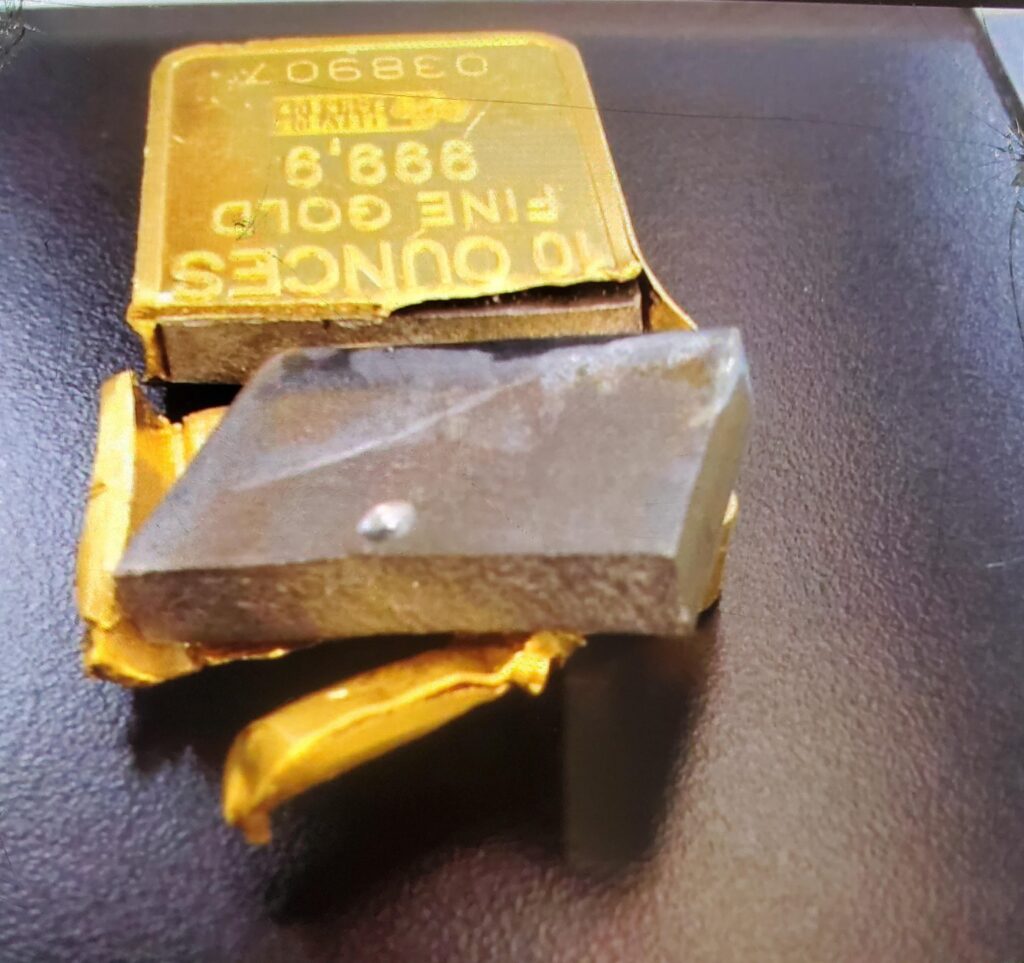
The Hobby Protection Act mostly covers coins and medals. But what about those fake gold bars sealed in assay cards bearing famous brand names like PAMP Suisse or Credit Suisse?
This is where federal trademark law comes into play. Selling lookalike goods that bear fake trademarks to fool consumers is a serious federal offense.
- Federal law defines a counterfeit trademark as a false mark that is identical to, or substantially indistinguishable from, a registered trademark.
- Making, selling, or even offering to sell counterfeit goods is illegal.
- Even if a seller explicitly tells the buyer that the designer item or branded bar is a “knockoff,” selling it is still illegal and can result in civil lawsuits, massive fines, or even criminal prosecution.
The law does not care if the immediate buyer knows it is a fake because counterfeit goods inherently damage the brand’s reputation and can easily be resold to a victim who doesn’t know better. In fact, if you sell a heavy, gold-plated tungsten bar, law enforcement might argue you knew your buyer intended to use it to fraudulently scam someone else down the line.
The Dangers of the Fake Bullion Market
Selling counterfeit coins or bars with the intent to defraud someone is a federal crime that can carry up to 15 years in prison. Even sellers who lack fraudulent intent can face severe penalties, seizures of their products, and lawsuits if they are peddling illegal counterfeits.
For buyers, the risk is purely financial. If you accidentally purchase a fake from a shady online seller, it can be nearly impossible to track them down to get your money back once they disappear.
What to Do If You Accidentally Bought Fake Bullion
If you realize you’ve been duped, your first instinct might be to try and recoup your losses by selling the item to someone else with a warning that it’s fake. Do not do this.
Even if you are 100% honest with your immediate buyer, you have no control over what they do next. They could easily turn around and scam an unsuspecting victim or an elderly investor who doesn’t know any better. By putting the fake back into circulation, you become part of the problem.
Instead, here is what you should do:
- Destroy it: The safest option is to take a hammer or a heavy set of bolt cutters to the piece. Render it completely unrecognizable and useless as a piece of bullion.
- Stamp it: If you want to keep it as a novelty or a reminder of a lesson learned, take a metal punch and permanently stamp the word “COPY” deep into the metal.
- Use it as an educational tool: At the shop, we often keep known fakes (properly marked!) to show customers exactly what to look out for.
How and Where to Report Counterfeit Sellers
If you spot someone peddling fake gold or silver online, or if you’ve fallen victim to a scammer, you shouldn’t just scroll past. You can report them to the proper authorities to help protect the collecting community:
- Anti-Counterfeiting Educational Foundation (ACEF): This non-profit organization works directly with law enforcement to track and shut down counterfeit coin and precious metals rings. You can report fakes directly on their website at acefonline.org.
- Federal Trade Commission (FTC): Because selling unstamped replicas violates the Hobby Protection Act, you can file a consumer complaint at ReportFraud.ftc.gov.
- Internet Crime Complaint Center (IC3): Run by the FBI, this is the place to report online scams and fraudulent websites selling fake bullion (ic3.gov).
- Platform Reporting: Always use the “Report Post” feature on Facebook Marketplace, Craigslist, or eBay to flag the listing for selling counterfeit goods so it can be taken down immediately.
Buy with Confidence at JoCo Coin Shop
The influx of counterfeit precious metals online is exactly why you should always buy from reputable, professional dealers. At JoCo Coin Shop, we take the guesswork and the risk out of buying precious metals.
- We Test Everything: We rigorously test and verify the authenticity of all the gold and silver we sell, as well as anything brought in for appraisal.
- Guaranteed Authenticity: When you buy from us, you never have to wonder if your investment is genuine.
- Local Trust: We stand by our products and our reputation in the community.
Don’t gamble your hard-earned money on sketchy Facebook listings. Visit us online at jococoinshop.com to build your collection with confidence and peace of mind!