How to Grade a Morgan Dollar: Where to Look for Wear
Learn to grade a Morgan silver dollar: the high points where wear shows first, how luster and bag marks affect the grade, and what prooflike means.
Morgan silver dollars are the most collected U.S. coins of the 1800s, and condition makes a big difference in what they’re worth. A common-date Morgan in worn condition and the same date in a high Mint State grade can be worlds apart.
You don’t need to be an expert to get a rough idea of your coin’s grade. Here’s where to look and what to look for.
Start With the Basics
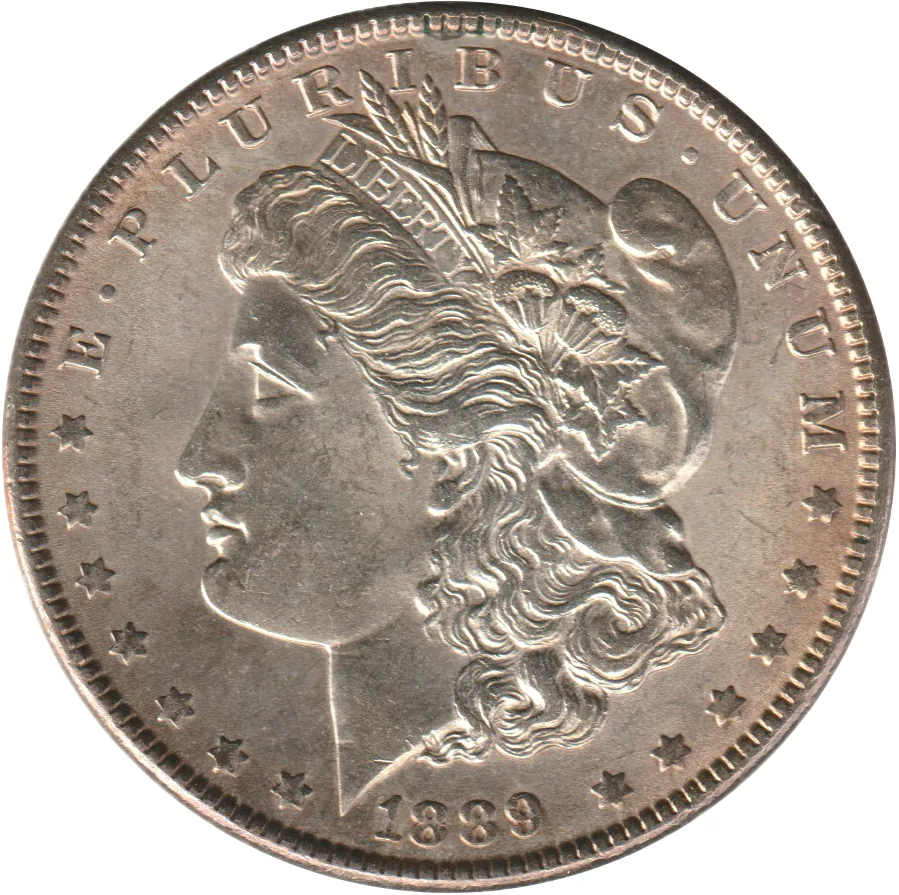
Morgan dollars were made from 1878 to 1904 and again in 1921. They’re 90% silver and weigh 26.73 grams. If you’re not sure whether you have a Morgan or a Peace dollar, see how to tell them apart.
Grades run on the 1 to 70 scale. If that’s new to you, read the coin grading scale for beginners first.
The High Points: Where Wear Shows First
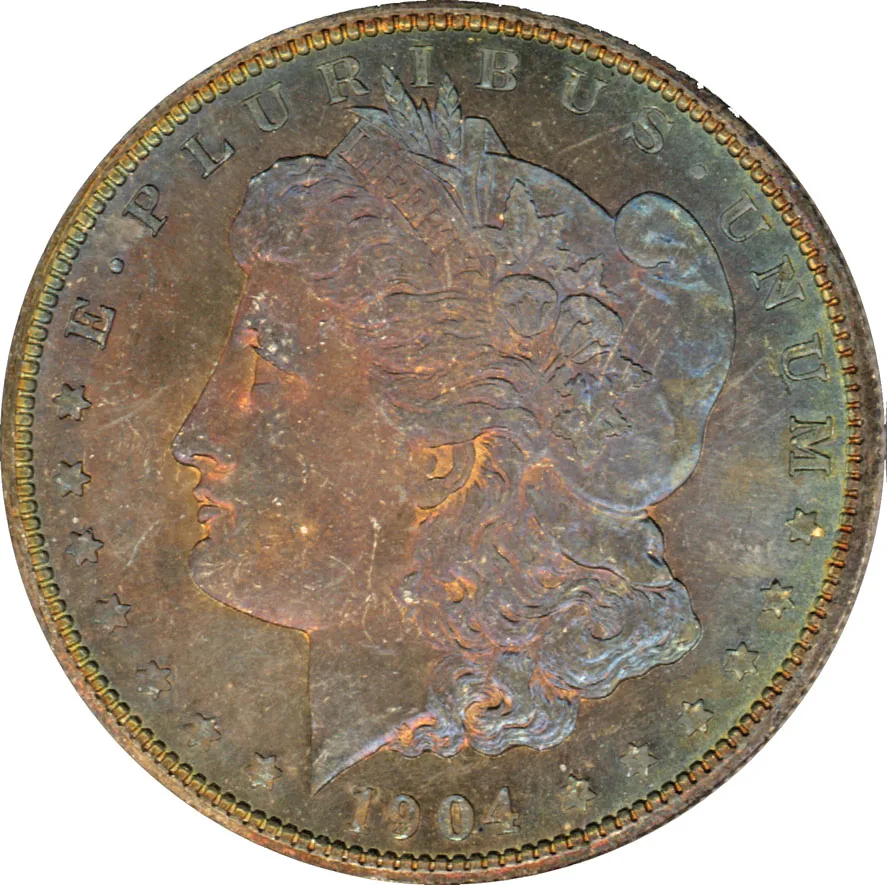
Wear starts on the highest parts of the design, the spots that rub first when a coin is handled or carried. On a Morgan dollar, check these:
On the front (Liberty):
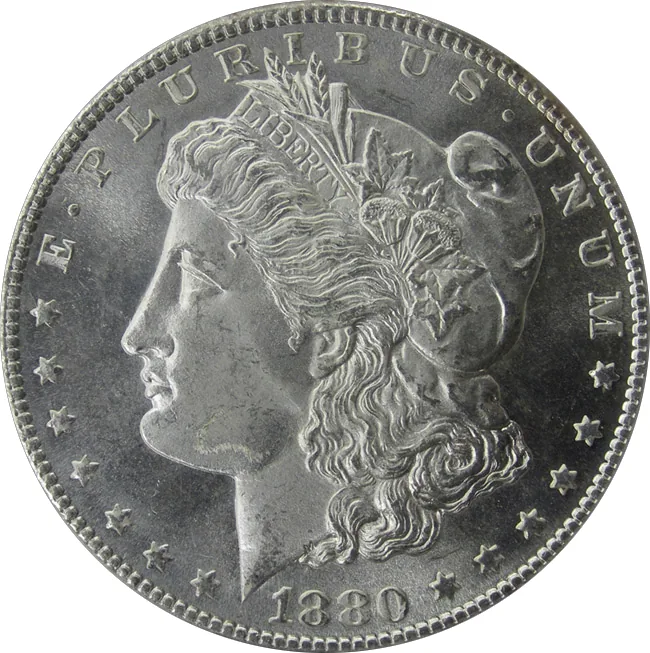
- The hair above Liberty’s ear and forehead. This is the most important spot. It flattens first.
- Her cheek. Look for a loss of luster and flat spots.
- The cotton blossoms and leaves in her cap.
On the back (the eagle):
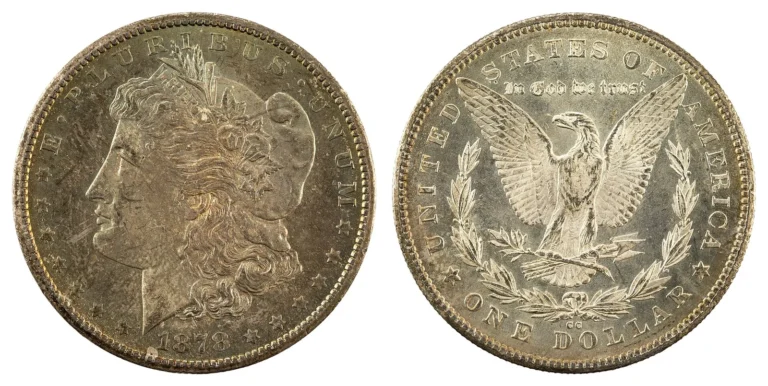
- The eagle’s breast feathers. These wear smooth early.
- The tops of the legs, the head, and the wing tips.
Tilt the coin slowly under a single light. Worn areas look flat and dull, while unworn areas reflect light.
A Quick Guide to Circulated Grades
These are rough descriptions to get you in the right neighborhood:
- Good (G-4 to G-6): Heavily worn, mostly an outline. Watch the rim: on a G-4 it just touches the tops of the letters, and by G-6 it should be full.
- Very Good and Fine (VG-8 to F-15): The major design elements come back into view, including the hairline around Liberty’s forehead and in front of her ear, and some internal detail in the eagle’s wing feathers.
- Very Fine (VF-20 to VF-35): From here up, it’s less about what you can see and more about what’s missing. Wear shows on all the high points, but much of the hair detail is still there.
- Extremely Fine (XF-40 to XF-45): Light wear on the high points. The hair above the ear shows some flatness, and the breast feathers are starting to show wear.
- About Uncirculated (AU-50 to AU-58): Just a trace of wear on the highest points, with most of the original luster remaining. The cheek is often the first place luster breaks.
Uncirculated Grades: Luster and Bag Marks
Once a Morgan has no wear at all, it’s Mint State (MS-60 to MS-70). At that point, the grade depends on:
- Bag marks. Morgans were shipped and stored loose in bags for decades, and they banged into each other. Those nicks and scrapes, especially on Liberty’s cheek and in the open fields, are the biggest factor in Mint State grades. Roughly: MS-60 to 62 coins are heavily marked, MS-63 and 64 have marks but none that distract, and MS-65 and up are quite clean, especially on the cheek and in the left field in front of Liberty’s face.
- Luster. Original Morgans have a frosty shine that rolls around the coin like a cartwheel when you tilt it. Strong luster raises the grade.
- Strike. Some dates and mints are known for weak strikes, especially in the hair above the ear and the eagle’s breast. A weak strike can look like wear, so compare the texture: a weak strike still has luster, while wear doesn’t.
- Eye appeal. Attractive, original toning can help, while dark or spotty toning can hurt.
Prooflike and Deep Mirror Prooflike
Some Morgans were struck from freshly polished dies, giving them mirror-like fields similar to a proof coin. The grading services call these Prooflike (PL) and, when the mirrors are especially deep, Deep Mirror Prooflike (DMPL). These designations can add a lot of value. Hold the coin a few inches above printed text: on a strong DMPL, you can read the reflection in the fields. See prooflike and DMPL Morgan dollars.
Common Grading Mistakes
- Mistaking a cleaned coin for an uncirculated one. A cleaned coin is often very bright but has hairline scratches and no true cartwheel luster. Grading services give cleaned coins a “details” grade. Please don’t clean your coins.
- Grading only the front. Always check the eagle’s breast too.
- Grading too high. Almost everyone does it at first. When in doubt, pick the lower grade.
Helpful Tools
- A 5x to 10x magnifier and a single bright lamp
- PCGS Photograde, a free online tool with photos of each grade for each coin type
- A copy of The Official American Numismatic Association Grading Standards for United States Coins
More on Morgans and grading: Carson City “CC” Morgan dollars, should I get my coins graded?, and coin collecting terms.
More guides: how to send coins to PCGS.
The Bottom Line
To grade a Morgan dollar, check the hair above Liberty’s ear, her cheek, and the eagle’s breast feathers for flat, dull spots. On uncirculated coins, look at bag marks, luster, and strike. And for any Morgan that might be a key date or a high grade, a professional opinion is worth getting before you buy or sell.
Have Morgan dollars to look at? JoCo Coin Shop offers honest, no-obligation appraisals across the Kansas City area. Contact me by phone, text, or email to get started.