Coin Collecting Terms Every Beginner Should Know
Obverse, reverse, key date, luster, slab, melt value: a plain-English glossary of the coin collecting terms beginners hear most.
Coin collectors have their own vocabulary, and it can make the hobby feel confusing at first. Here’s a plain-English glossary of the terms you’ll hear most often, whether you’re starting a collection or selling one.
Parts of a Coin
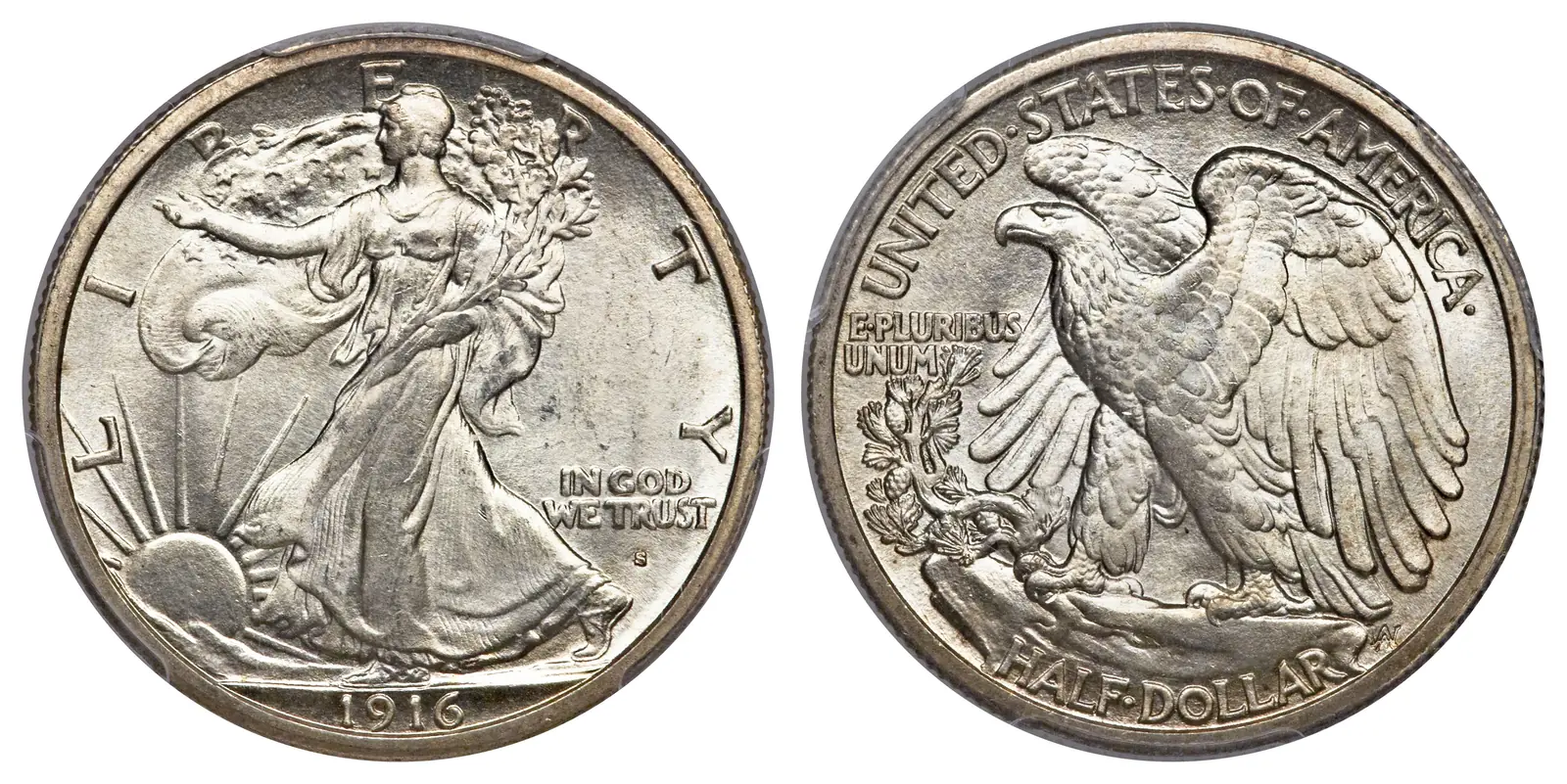
- Obverse: The front, or “heads” side. Usually has the portrait and the date.
- Reverse: The back, or “tails” side.
- Edge: The outer side of the coin. It can be plain, reeded (ridged), or lettered.
- Rim: The raised border around each face that protects the design.
- Field: The flat background areas of the design.
- Device: A main design element, like a portrait or an eagle.
- Legend: The main lettering, like UNITED STATES OF AMERICA.
- Mint mark: A small letter showing where the coin was made. See where is the mint mark?
How Coins Are Made
- Planchet: The blank metal disc a coin is struck on.
- Die: The steel tool that stamps the design onto the planchet.
- Strike: How sharply the design was pressed into the coin.
- Mintage: The number of coins made of a certain date and mint.
- Proof: A coin specially made for collectors, with mirror-like fields.
- Business strike: A regular coin made for circulation.
Condition and Grading
- Grade: A coin’s condition, usually on the 1 to 70 scale. See the grading scale explained.
- Circulated: Shows wear from being used as money.
- Uncirculated (Mint State, MS): No wear at all.
- BU (Brilliant Uncirculated): A common term for nice uncirculated coins.
- Luster: The satiny shine on an uncirculated coin’s surface.
- Toning: Natural color that develops on a coin over time.
- Cleaned: A coin that has been polished or chemically treated, which lowers its value.
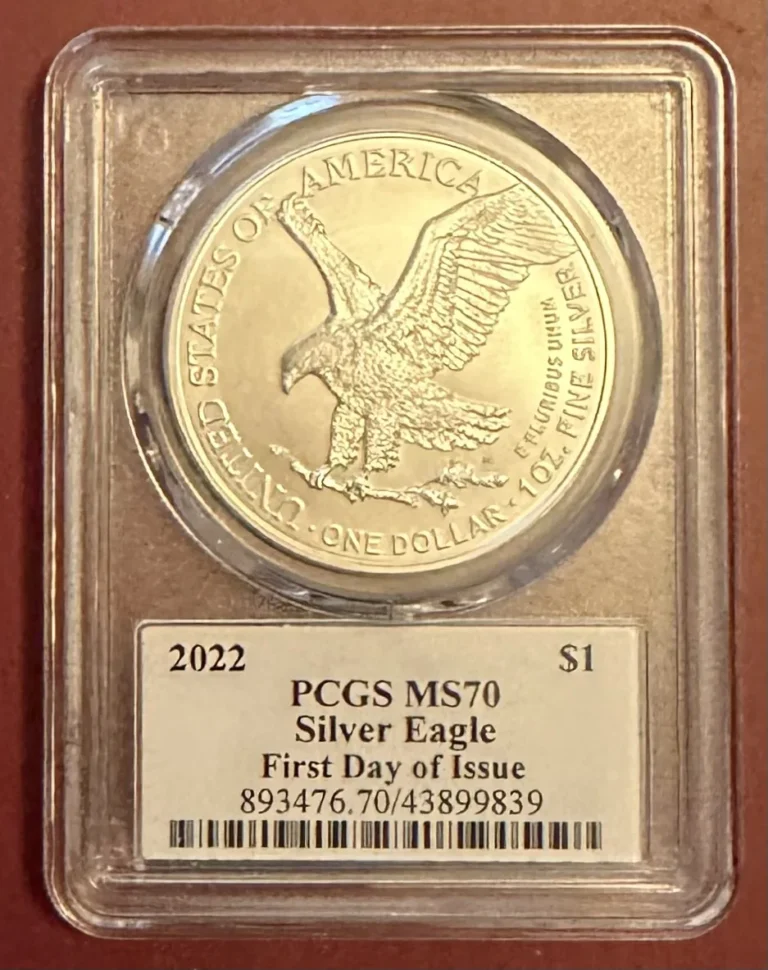
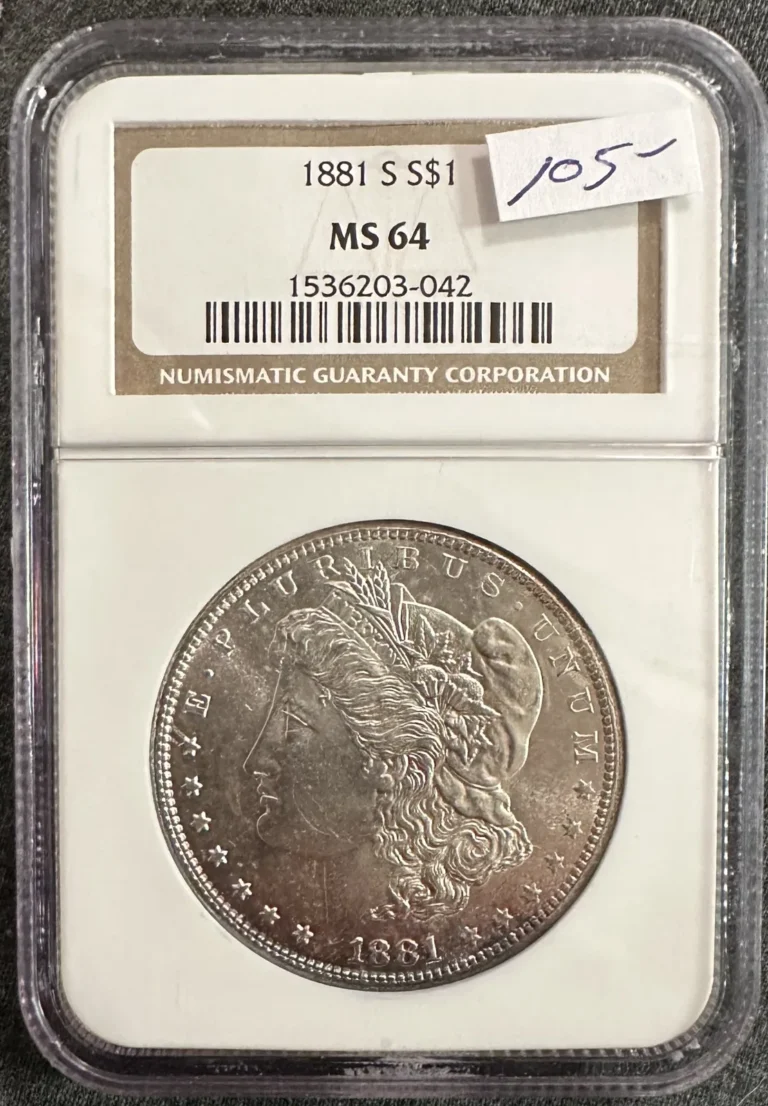
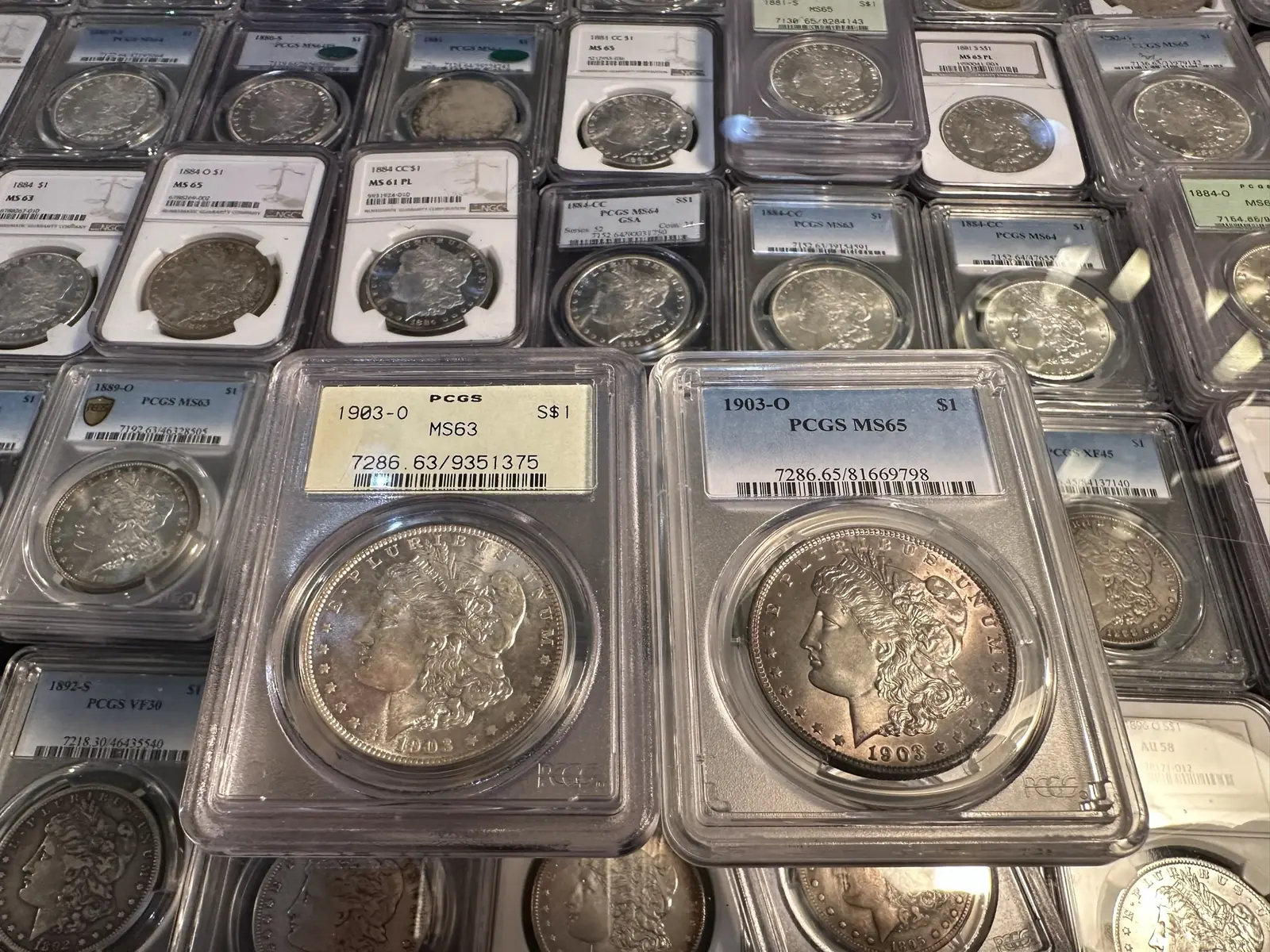
- Slab: A sealed plastic holder from a grading company like PCGS or NGC.
Value and Rarity
- Key date: The hardest and usually most valuable date in a series.
- Semi-key: A scarce date that’s easier to find than the key.
- Common date: A date made in large numbers.
- Variety: A known, repeatable difference in a coin’s design from a specific die, like a doubled die.
- Error: A one-time mistake in making a coin, like an off-center strike.
- Type coin: A common example of a particular design, collected to represent that type.
Precious Metals
- Bullion: Silver, gold, or other precious metal valued mainly for its metal content.
- Spot price: The current market price of a precious metal per troy ounce. See what is the spot price?
- Premium: The amount above the metal’s value that a coin or bar sells for.
- Melt value: The value of a coin’s metal content alone.
- Junk silver: Common, worn U.S. 90% silver coins traded for their silver.
- Clad: Modern coins made of layers of copper-nickel over a copper core.
- Troy ounce: The unit used for precious metals, about 31.1 grams.
More guides: how to start collecting, should I get my coins graded?.
The Bottom Line
You don’t need to memorize every term, but knowing the basics makes it much easier to understand what you have and what a dealer is telling you. If you hear a word you don’t know, ask. A good dealer will happily explain.
Have questions about your coins? JoCo Coin Shop offers honest, no-obligation appraisals across the Kansas City area. Contact me by phone, text, or email to get started.