Are $2 Bills Worth Anything? Red Seals, 1976 Bills, and Star Notes
Most $2 bills are worth face value, but red seal notes, star notes, and older large-size $2 bills can be worth more. Here's how to check yours.
Two-dollar bills have a reputation for being rare. A lot of people save every one they get, and plenty of grandparents gave them out as gifts. The truth is that $2 bills are still printed today and most are worth exactly two dollars. But some older ones are worth more.
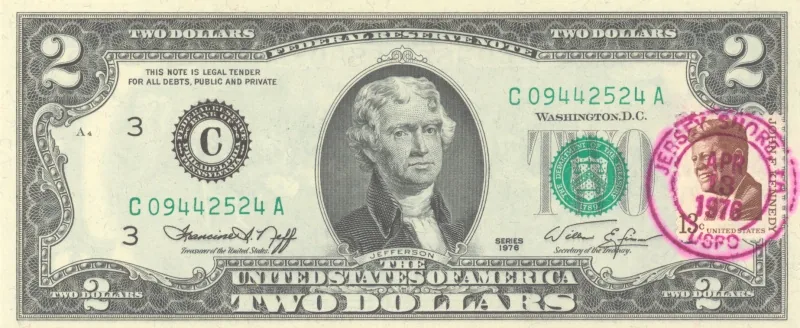
Modern $2 Bills (1976 to Today)
The $2 bill was brought back in 1976, released on April 13, Thomas Jefferson’s birthday, for the Bicentennial. These notes have Jefferson on the front and a scene of the signing of the Declaration of Independence on the back. They have a green seal, like other modern bills.
- Most are worth face value. Hundreds of millions were printed.
- Crisp, uncirculated notes may bring a small premium.
- Star notes (with a ★ in the serial number) are replacement notes and can be worth more, depending on the series.
- “First day of issue” notes: Some people took 1976 $2 bills to the post office and had a stamp canceled on them on April 13, 1976. These are a fun collectible with a modest premium.
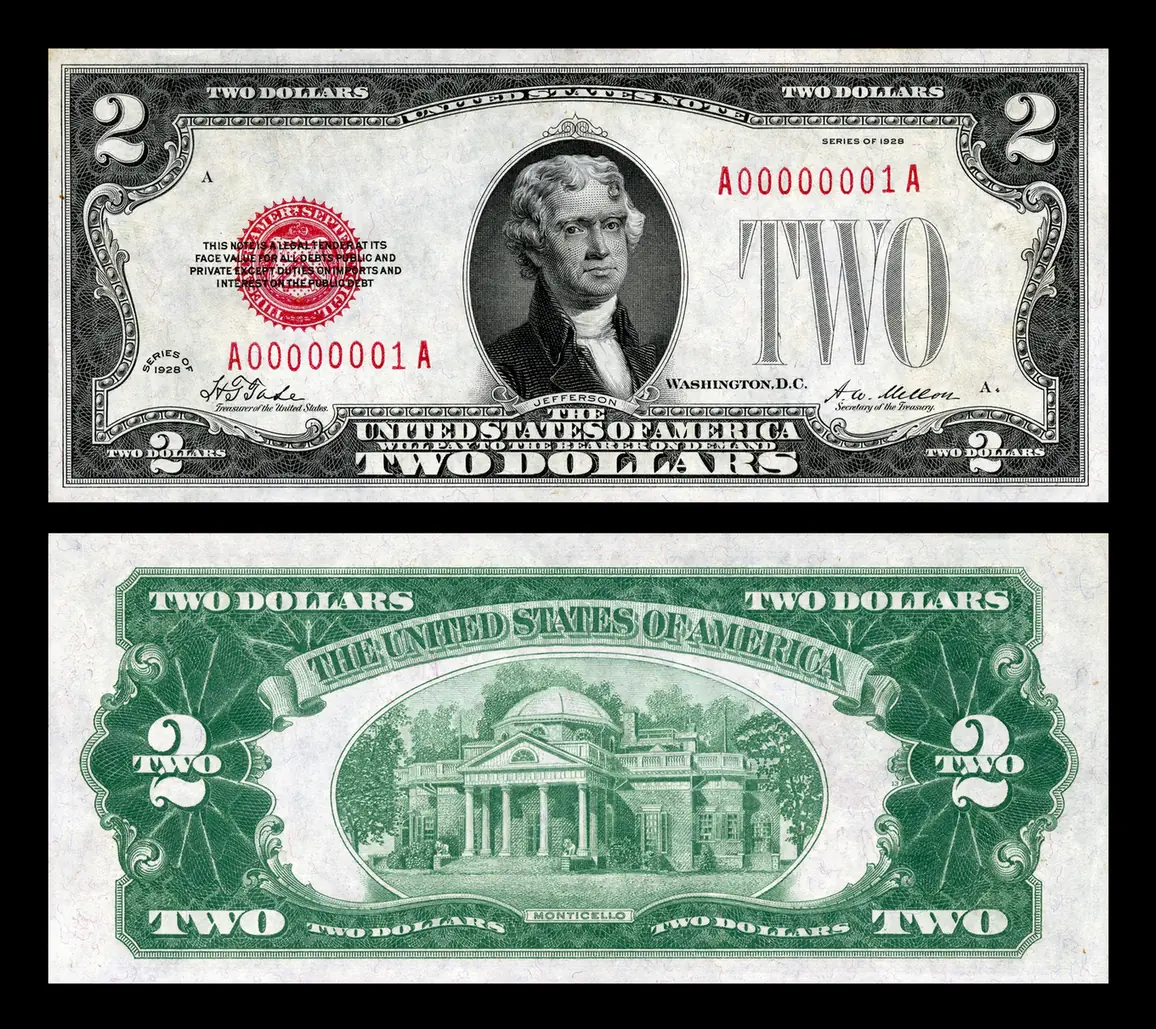
Red Seal $2 Bills (1928 to 1963)
Older small-size $2 bills were United States Notes, with a red seal and red serial numbers. They also show Jefferson on the front, but the back shows Monticello, his home.
- Series 1928, 1953, and 1963 are the main series you’ll see, with letter suffixes like 1928A or 1953B.
- Worn red seals are worth a small premium.
- Crisp, uncirculated examples and star notes are worth more, and some 1928 series notes are scarce.
Large-Size $2 Bills (Before 1929)
Before 1929, U.S. paper money was bigger. Large-size $2 bills from the 1800s and early 1900s, including the 1918 “battleship” note, are collectible and worth much more than face value, even when worn.
What Makes a $2 Bill Worth More
- Condition: Crisp, no folds, bright colors
- Red seal or large size
- Star notes
- Fancy serial numbers, like 00000123 or 77777777
- Printing errors, like misaligned printing or missing ink
Don’t “Fix” Old Notes
Don’t iron, wash, or tape old bills. These changes are easy to spot and lower the value. Keep them flat in a paper money sleeve. For more, see my paper money grading guide.
More guides: silver certificates, Bicentennial coins, National Bank Notes.
The Bottom Line
Most $2 bills from 1976 and later are worth face value. Red seal $2 bills, star notes, crisp uncirculated notes, and large-size $2 bills are the ones worth a closer look.
Have old paper money? JoCo Coin Shop offers honest, no-obligation appraisals across the Kansas City area. Contact me by phone, text, or email to get started.