National Bank Notes: Why Old Bills from Kansas and Missouri Towns Are Collectible
Old National Bank Notes carry the name of a local bank and town. Learn how to spot one and why notes from Kansas and Missouri towns are collected.
Have you ever seen an old U.S. bill with the name of a hometown bank printed right on it, like “The First National Bank of” some small town? That’s a National Bank Note, and it’s one of the most popular kinds of paper money with collectors, especially those who collect notes from their own state.
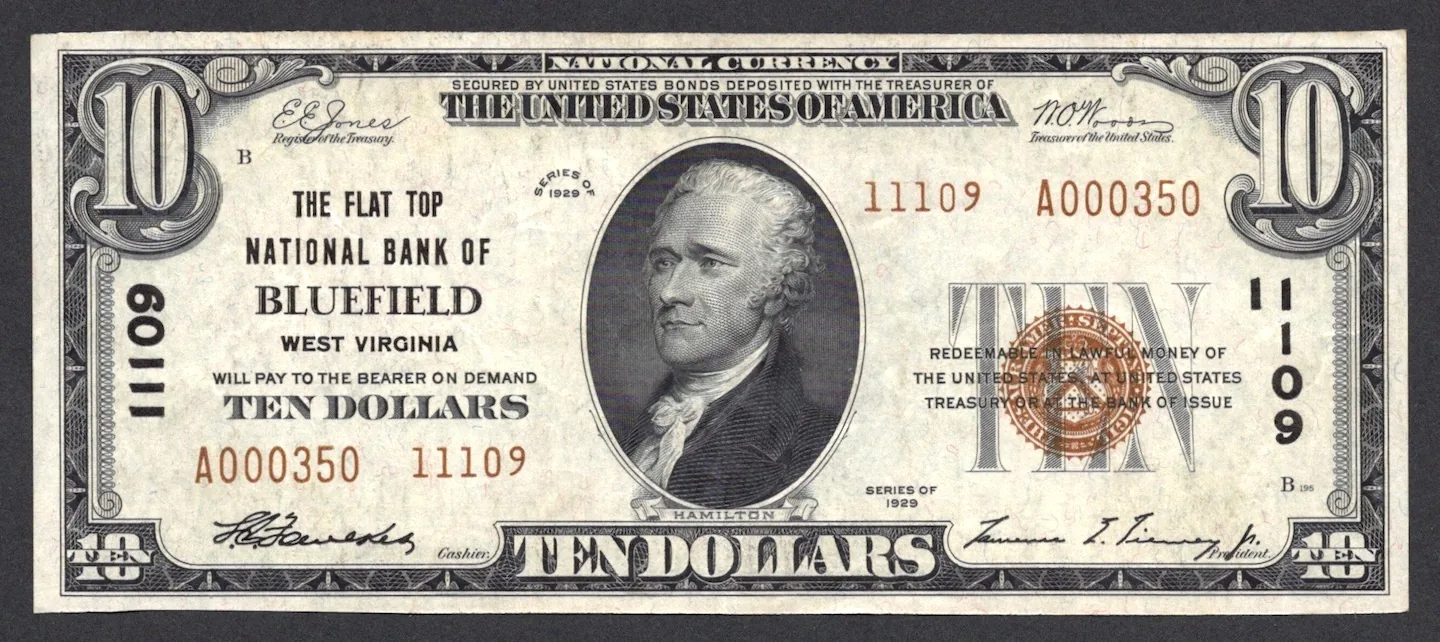
What Is a National Bank Note?
From 1863 to 1935, thousands of banks across the country were chartered as “national banks.” Each one could issue its own paper money, backed by U.S. government bonds the bank had deposited with the Treasury. The notes were printed by the government but carried:
- The name of the bank and its town and state
- The bank’s charter number
- The signatures of the bank’s officers
That means a single type of note can come from hundreds of different towns, which is exactly what makes them fun to collect.
Large-Size and Small-Size Notes
- Large-size notes (1863 to 1929): Bigger than modern money, with elaborate designs. Some have beautiful scenes on the back.
- Small-size notes (1929 to 1935): The same size as modern money, with a brown seal and brown serial numbers. The bank’s name is printed on the front.
National Bank Notes ended in 1935.
Why Kansas and Missouri Notes Are Collected
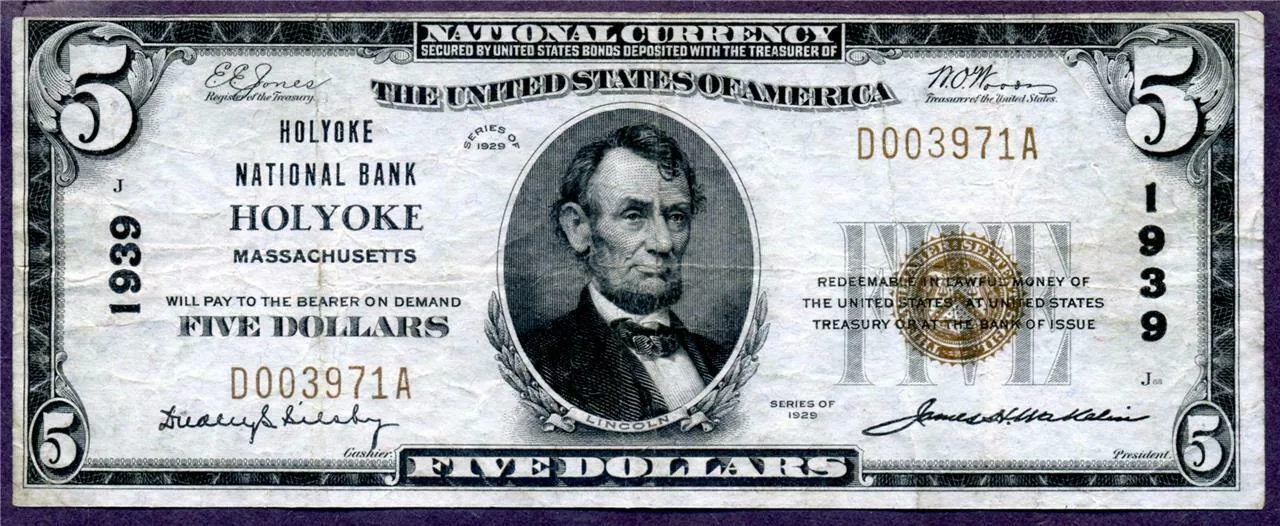
Many collectors focus on their home state, or even their hometown. Notes from small towns, or from banks that issued very few notes, can be scarce. Kansas and Missouri had many national banks, from big city banks in Kansas City and St. Louis to small-town banks across the plains. A note from a small town where only a few survive can be worth far more than a similar note from a big city.
What Affects Value
- The bank and town: Rare banks and small towns bring the biggest premiums.
- Condition: Crisp notes are worth more than heavily folded, worn, or torn ones.
- Type and denomination: Large-size notes are generally worth more than small-size, and some designs are especially popular.
- Serial number: Low serial numbers, like 1, are especially prized.
How to Take Care of Old Notes
- Don’t fold, tape, iron, or wash them.
- Keep them flat in a paper money sleeve.
- Don’t write on them or try to repair tears.
For more on condition, see my paper money grading guide.
More guides: silver certificates, gold certificates, fractional currency, Confederate money.
The Bottom Line
National Bank Notes are U.S. bills issued by local banks from 1863 to 1935, with the bank’s name and town printed on them. They’re especially popular with collectors who focus on their own state, and notes from small Kansas and Missouri towns can be valuable.
Have an old bill with a bank’s name on it? JoCo Coin Shop offers honest, no-obligation appraisals across the Kansas City area. Contact me by phone, text, or email to get started.