Buffalo Nickels: Dates, Key Coins, and What “No Date” Ones Are Worth
Buffalo nickels were made from 1913 to 1938. Here's how to read worn dates, which key dates to look for, and why acid-restored dates hurt value.
The Buffalo nickel is one of the most loved American coins. Its Native American portrait and bison design feel like pure American West, and lots of families have a few tucked away. But because the date sits on a high spot of the design, many Buffalo nickels have worn completely smooth where the date should be.
Here’s what you need to know.
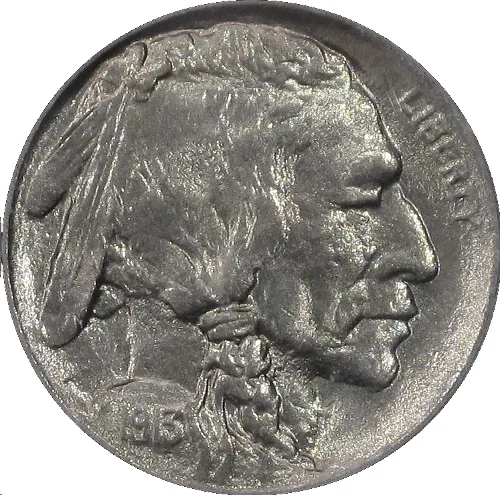
The Basics
- Made from 1913 to 1938
- Designed by sculptor James Earle Fraser
- Struck at Philadelphia (no mint mark), Denver (D), and San Francisco (S)
- The mint mark is on the back, below the words FIVE CENTS
- Made of 75% copper and 25% nickel. There’s no silver in Buffalo nickels.
Type 1 and Type 2 (1913)
In 1913, the bison on the back originally stood on a raised mound (Type 1). The words FIVE CENTS wore away quickly, so later that year the mound was flattened into a straight line, with FIVE CENTS recessed below it (Type 2).
Key Dates to Look For
- 1913-S Type 2: The lowest-mintage regular issue in the series.
- 1918/7-D: An overdate where a 7 shows under the 8. Rare and valuable.
- 1916 Doubled Die: Doubling on the date.
- 1921-S and 1926-S: Low-mintage San Francisco dates.
- 1937-D “Three-Legged”: The bison is missing its front leg because the die was over-polished. One of the most famous varieties of the 20th century.
The 1937-D Three-Legged is widely faked, often by someone grinding off a leg. A genuine one has specific die characteristics, so it’s worth getting checked.
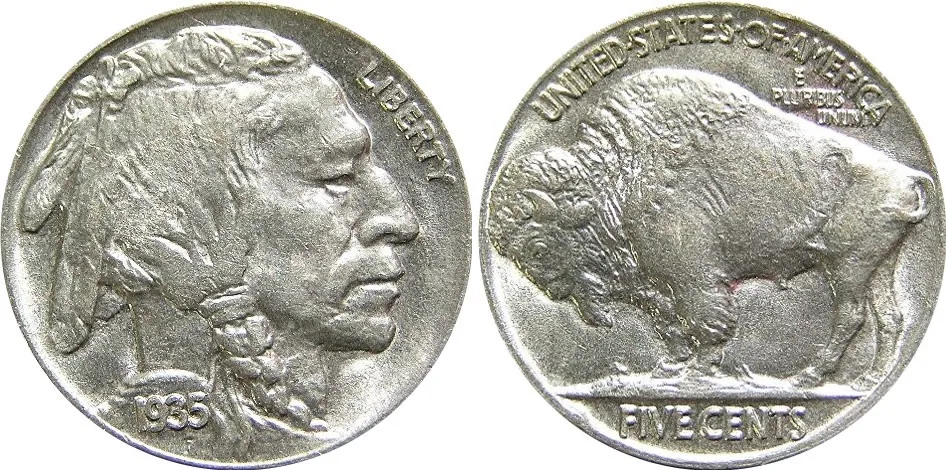
What About Nickels with No Date?
Dateless Buffalo nickels are very common. They’re worth only a small amount each and are usually sold in groups.
You may have heard of liquids sold to “restore” the date. They work by etching the coin with acid, which brings back a faint, dark image of the date. It does tell you the date, but it permanently damages the coin. An acid-restored key date is worth far less than a natural one. In my opinion, it’s only worth doing on a coin that’s already dateless and you’re simply curious.
Condition Matters
Buffalo nickels with a full, clear date and strong detail on the bison’s horn and head are worth more. Uncirculated coins with original luster, especially from the scarcer dates, are worth much more. As always, don’t clean them.
More guides: Liberty Head “V” nickels, wartime silver nickels, Indian Head pennies.
The Bottom Line
Buffalo nickels were made from 1913 to 1938 and contain no silver. Check the date and mint mark first, look for the key dates and varieties, and don’t worry if you have a pile of dateless ones; they’re common.
Have a stash of Buffalo nickels? JoCo Coin Shop offers honest, no-obligation appraisals across the Kansas City area. Contact me by phone, text, or email to get started.