Paper Money Grading Scale: How to Grade Your Notes
A plain-English guide to the paper money grading scale, from Poor 1 to Gem Uncirculated 70, with real graded notes and the best books to learn from.

When I started grading paper money, I had a hard time finding one clear resource that explained the grades in plain English and showed what each one looks like. Coin grading guides are everywhere. Good paper money guides are not. So I wrote the guide I wish I’d had.
Below you’ll find how the paper money grading scale works, what separates each grade, real graded notes as examples, a step-by-step way to grade your own notes, and the books I recommend if you want to go deeper.
How the Paper Money Grading Scale Works
Paper money is graded on the same 1 to 70 scale used for coins (see the coin grading scale for beginners). A 1 is a note that is barely identifiable, and a 70 is a flawless, never-handled note. The major third-party grading services, PMG (Paper Money Guaranty) and PCGS Banknote, both use this scale, and you’ll still see notes in older holders from services like PCGS Currency and Legacy Currency Grading.
Where coin grading is mostly about wear on the high points of the design, paper money grading comes down to a few key things:
- Folds and creases: How many, and how heavy. This is the biggest factor in most grades.
- Paper quality: Is the paper still crisp and original, or soft, limp, and tired?
- Circulation wear: Soiling, rounded corners, and frayed edges.
- Problems: Tears, pinholes, stains, tape, writing, or missing pieces.
- Centering and margins: Mostly matters at the Uncirculated level, where the design should sit evenly within the borders.
The Grades, From Best to Worst
Gem and Superb Gem Uncirculated (65–70)
Never folded and never circulated. The paper is crisp and original, the ink is bright, the corners are sharp, and the margins are well balanced. The higher you go, the closer to perfect the centering and eye appeal need to be. A true 70 is extremely rare.
Choice Uncirculated (63–64)
Still no folds, but something keeps the note out of Gem. Usually that’s uneven margins or a very minor handling mark.
Uncirculated (60–62)
Never folded, but it may show counting crinkles, handling marks, a corner bump, or tight or uneven margins. These are new notes that have been handled.
About Uncirculated (50–58)
Looks new at a glance, but has a single light fold (often down the center) or a few light corner folds. An AU 58 typically has just one light fold or a corner tip fold.
Extremely Fine (40–45)
A bright, crisp note with up to about three light folds, or one heavier crease. Very little soiling.
Very Fine (20–35)
Clearly circulated. More folds, some light soiling, and the paper has lost some of its snap, though it still has body. The higher end (30–35) keeps more crispness. The lower end (20–25) shows more folds and dirt.
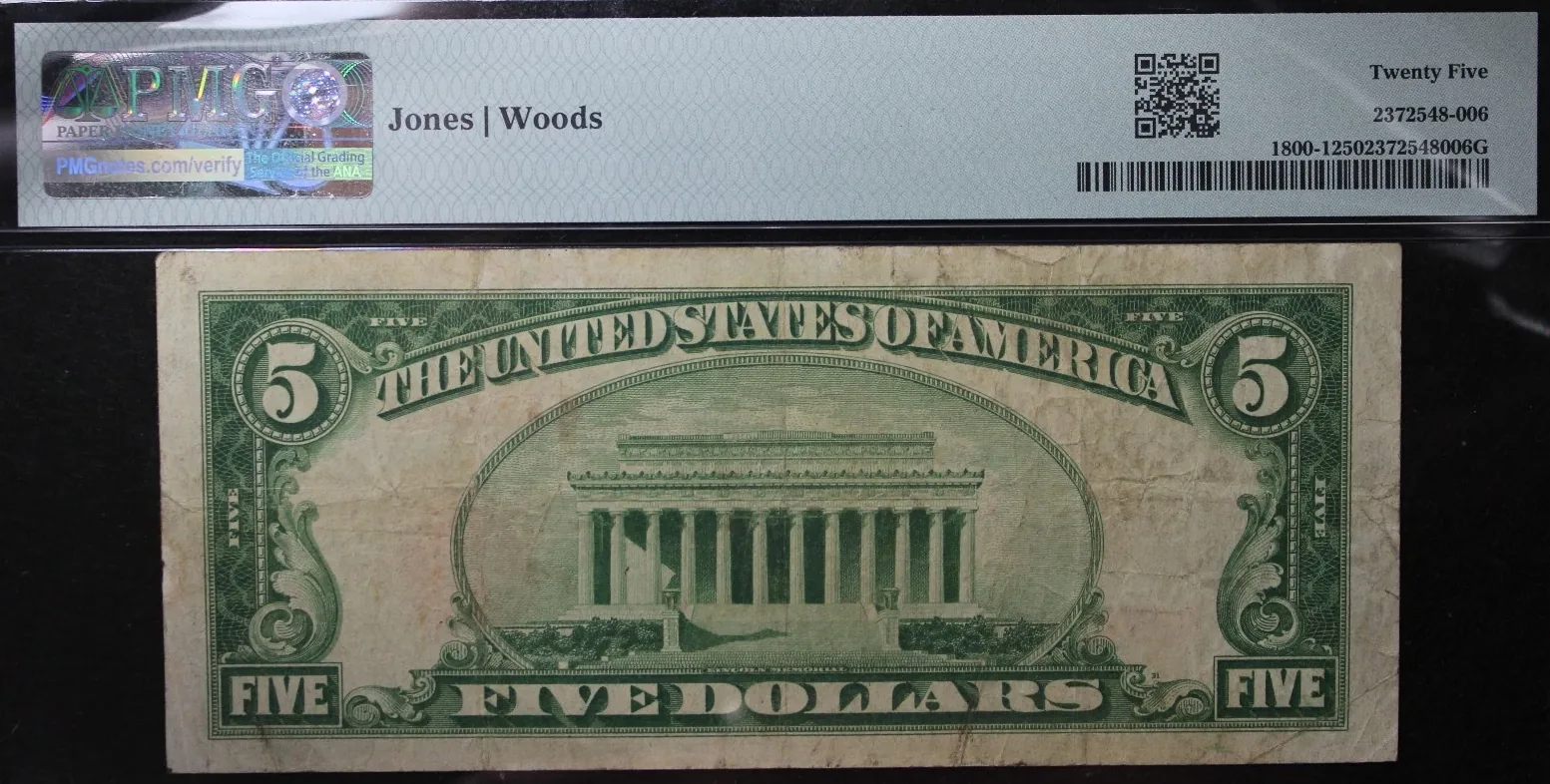
Fine (12–15)
Heavily circulated with many folds and softening paper, but the note is whole and the design is still clear.
Very Good (8–10)
Well worn and limp. Expect rounded corners, soiling, light stains, and possibly small splits at the edges or folds. The note is still intact.
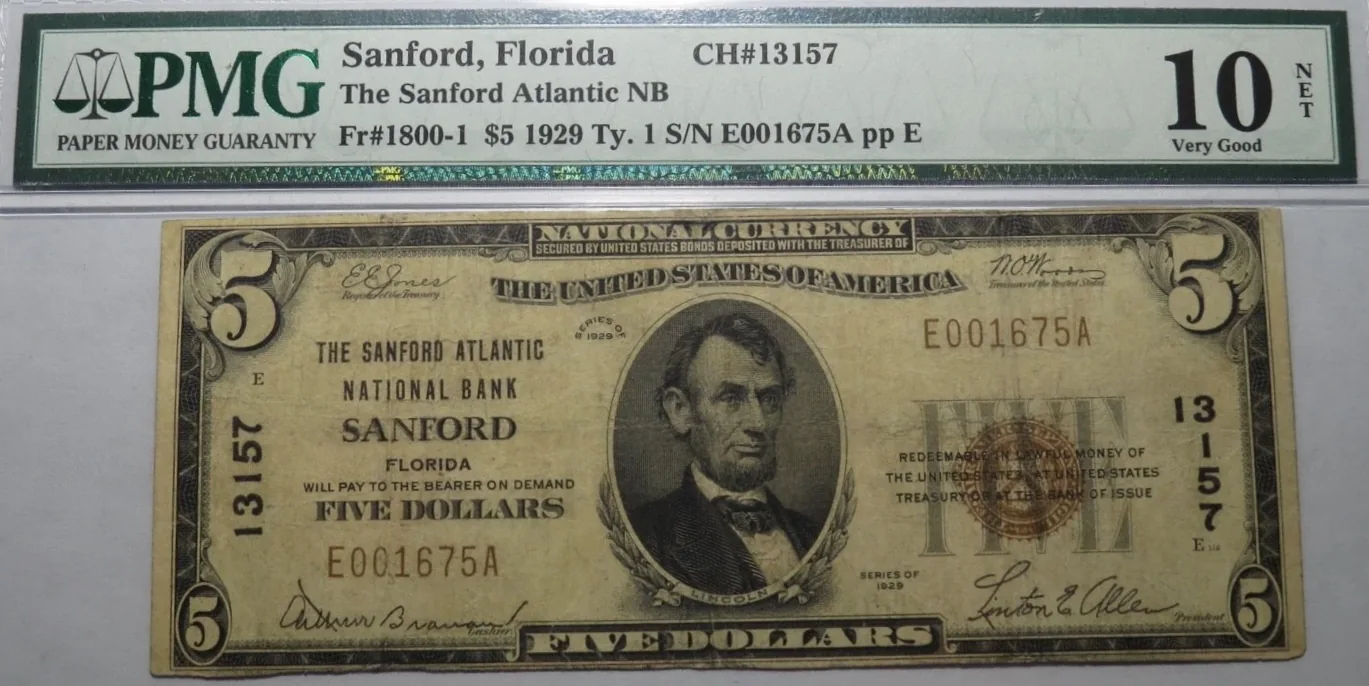
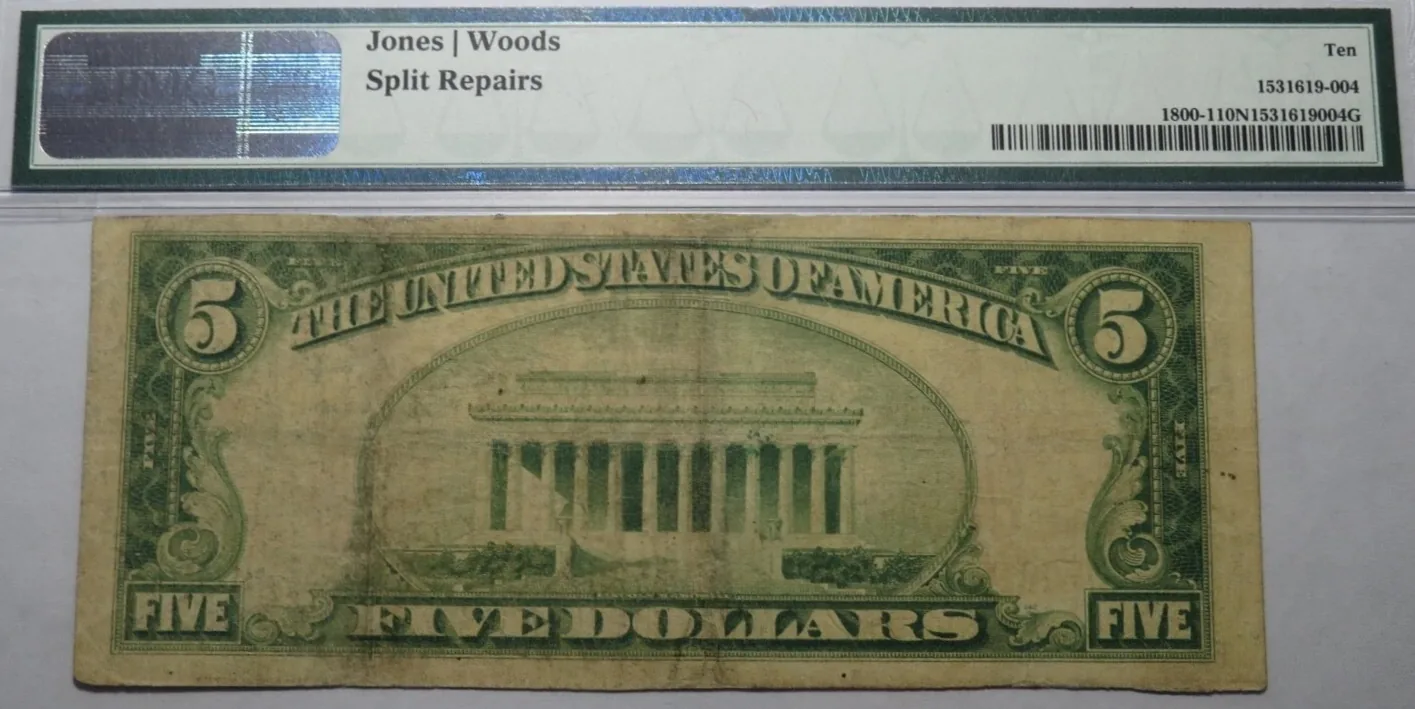
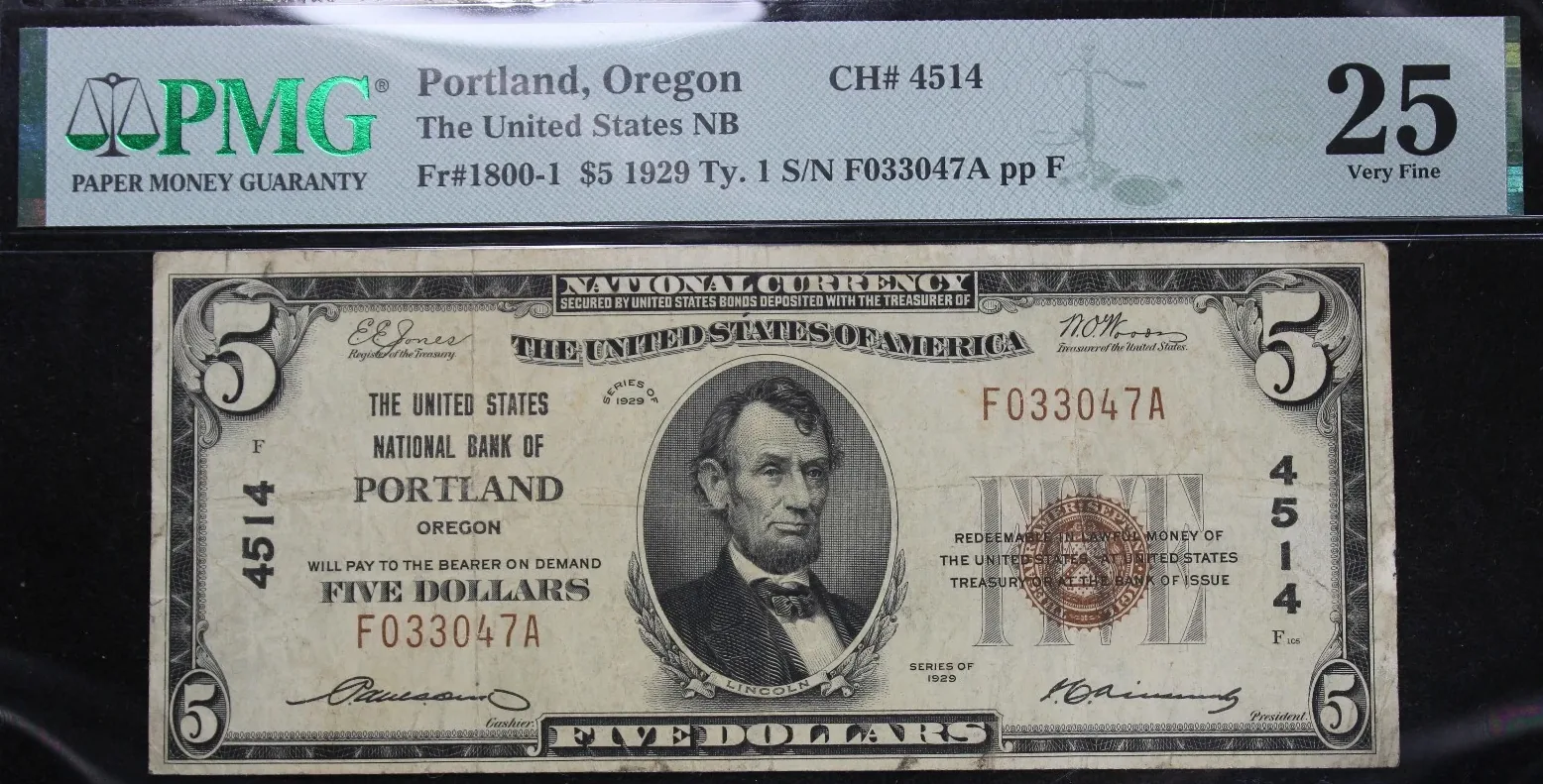
Three of the example notes are 1929 $5 National Bank Notes; if you have Nationals from this area, see my guide to National Bank Notes from Kansas and Missouri. The VG 10 note above is labeled NET, which tells you it has a problem. More on NET grades below.
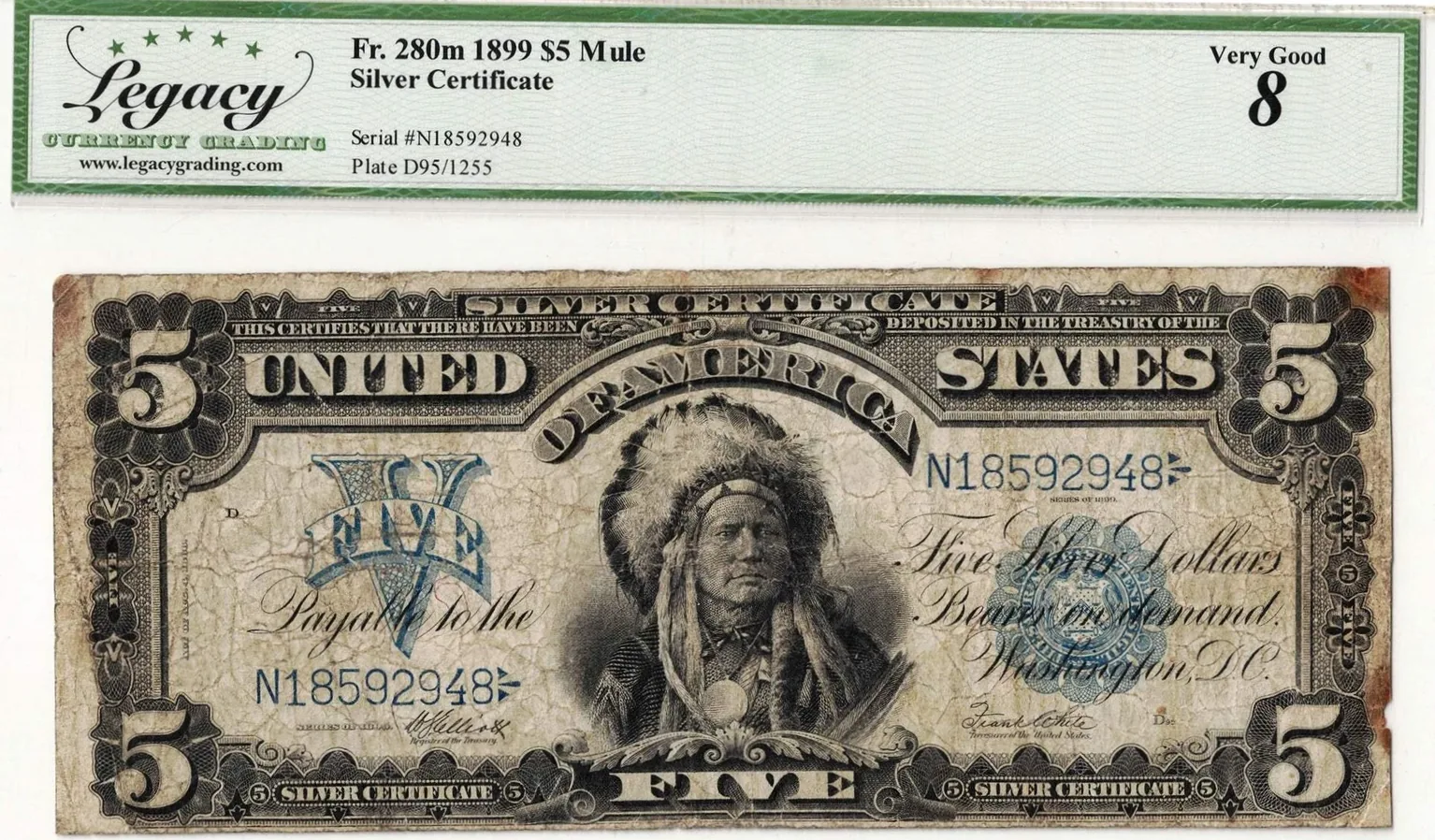
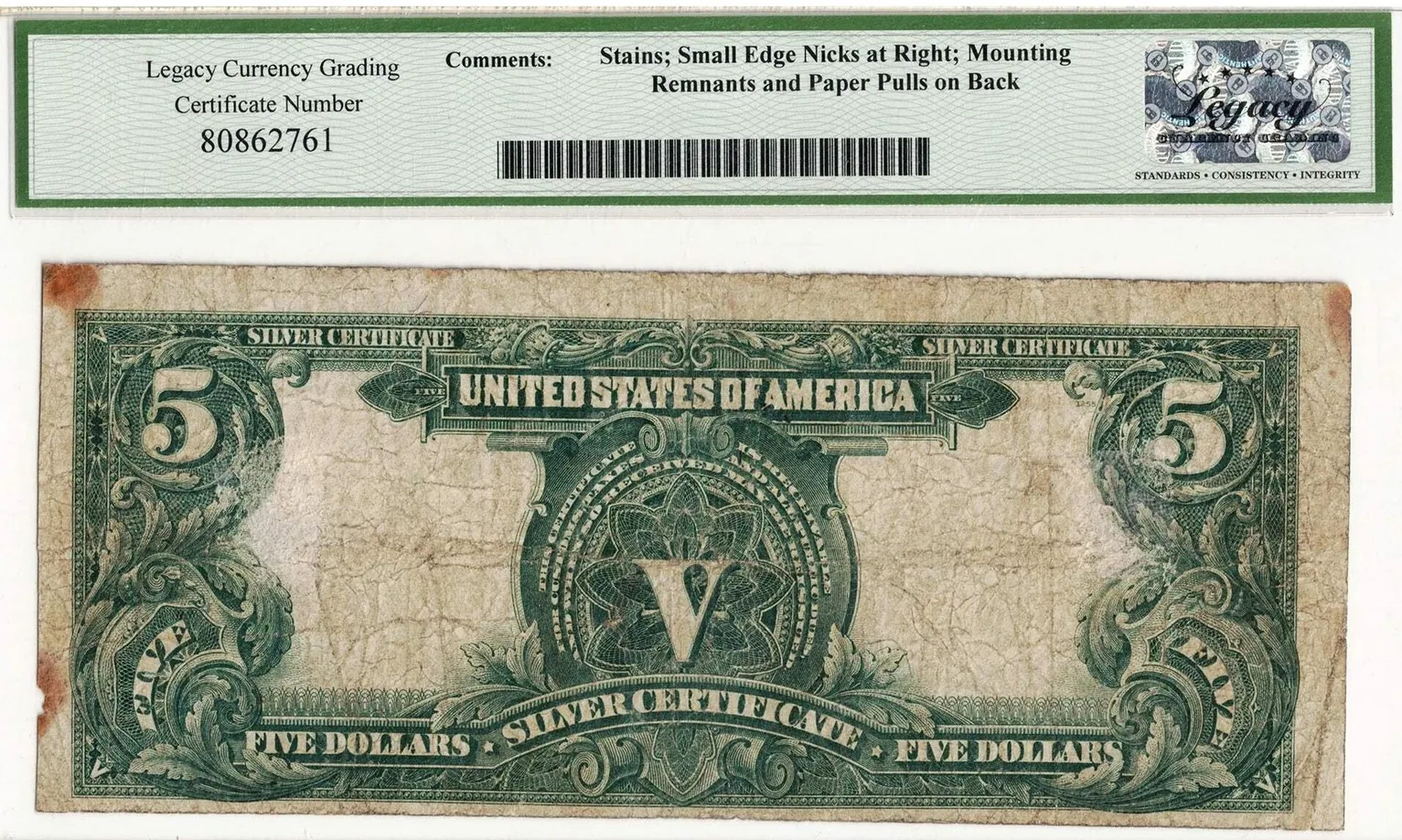
Good (4–6)
Very worn, with splits along the folds, frayed margins, and sometimes small pieces missing from the edges. The design is still fully identifiable.
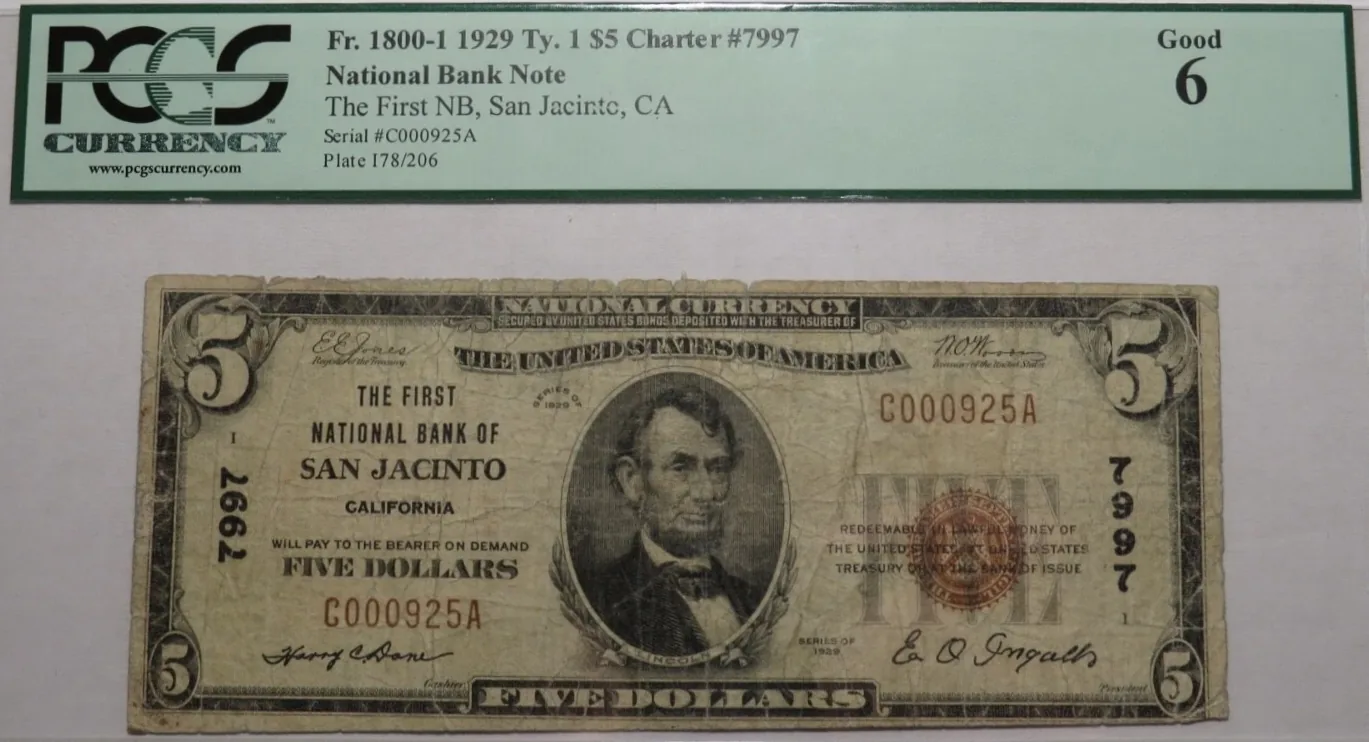
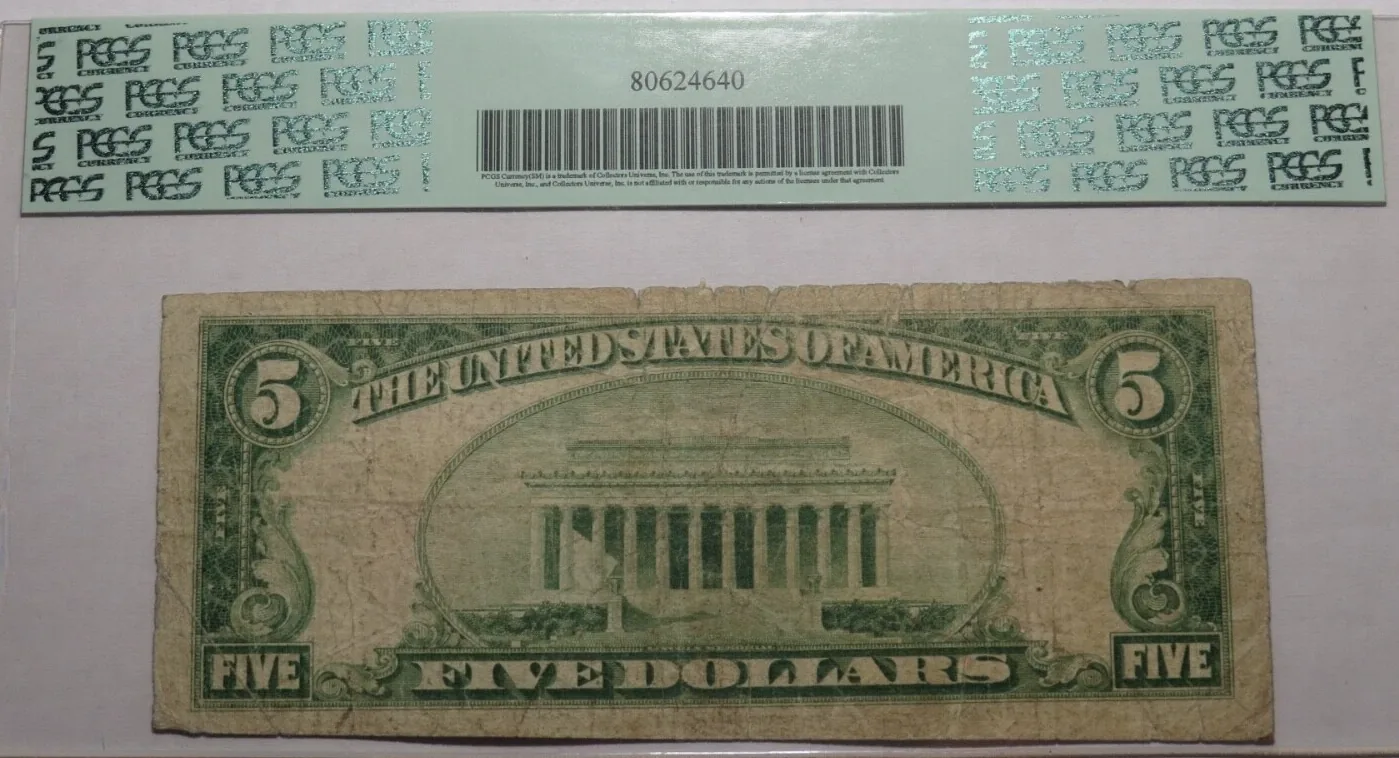
Fair and Poor (1–3)
Major damage: large pieces missing, heavy stains, big tears, or heavy writing. A note this rough usually only holds collector value if the issue itself is rare.
NET Grades and Paper Quality Designations
When a note has a problem, such as a repaired tear, pinholes, tape, a stain, or graffiti, the grading service still gives it a number for its overall wear but flags the problem. PMG calls this a NET grade and usually describes the issue on the label. Other services use terms like “Apparent” or “Details.” A NET-graded note is worth less than a problem-free note at the same number.
At the other end, notes with fully original paper can earn a quality designation. PMG uses EPQ (Exceptional Paper Quality) and PCGS Banknote uses PPQ (Premium Paper Quality). These tell you the note hasn’t been washed, pressed, or otherwise “processed” to make it look better, and collectors pay more for them.
How to Grade a Note Yourself
You don’t need special equipment to get close. Here’s the process I use:
- Handle it carefully. Clean, dry hands, and lay the note on a flat, clean surface. Don’t flex or snap it to test crispness.
- Look under good light. Start with overhead light, then tilt the note under a lamp at a low angle. Angled light makes folds, creases, and handling marks jump out.
- Hold it up to the light. This reveals pinholes, thin spots, small tears, and repairs.
- Count the folds. Note whether each one is a hard fold that breaks the paper and ink, or just a soft bend.
- Check the corners and edges for rounding, fraying, splits, and missing pieces.
- Look for problems: stains, tape, writing, rust from paper clips, or signs of repair.
- Check for originality. On an original note you can often see the serial numbers and seal slightly embossed (raised) when you look at the back under angled light. Pressing and washing flatten that embossing, and processed paper can look unusually flat or bright.
- Check the margins. For Uncirculated notes, look at how evenly the design sits within the borders.
- Compare and be conservative. Line your note up against the examples above, and when you’re between two grades, pick the lower one. Most people grade their own notes a step or two too high.
Never “Improve” a Note
Never wash, iron, press, tape, or trim a note to make it look better. Collectors and grading services can spot processed notes, and the damage almost always costs more value than it adds. Store notes flat in archival-safe currency sleeves, never in old PVC holders, and keep them away from heat and humidity.
Grading guides for specific notes: silver certificates, gold certificates, $2 bills, fractional currency, and Confederate money.
Books I Recommend
If you want to really learn paper money, these are the references I’d start with:
- A Guide Book of United States Paper Money by Arthur L. and Ira S. Friedberg (Whitman). The best all-in-one starting point, with history, a grading section, and values in multiple grades for each note. Look for the newest edition, which is sold as the Red Book of United States Paper Money.
- Paper Money of the United States by Arthur L. and Ira S. Friedberg (Coin & Currency Institute). The standard catalog of U.S. paper money. The “Fr.” numbers you see on grading labels, like Fr. 1800-1 on the notes above, come from this book.
- United States Paper Money Errors by Frederick J. Bart. The go-to reference if you collect error notes.
PMG also keeps a longer list of the most important U.S. paper money books, The 17 Most Important US Paper Money Books That Should Be In Your Library, which is worth a look once you know which area you want to collect.
The bottom line
Grading paper money comes down to folds, paper quality, wear, and problems. Learn to count folds under angled light, judge how much life is left in the paper, and spot problems and processing, and you’ll be able to place most notes within a grade or two. For valuable notes, a professional opinion is always worth getting before you buy, sell, or send a note in for grading.
Have paper money like this? JoCo Coin Shop offers honest, no-obligation appraisals across the Kansas City area. Contact us by phone, text, or email to get started.