Fractional Currency: The Paper Nickels and Dimes of the Civil War
During the Civil War, the U.S. printed paper money worth 3 to 50 cents. Learn the story of fractional currency and what these tiny notes are worth.
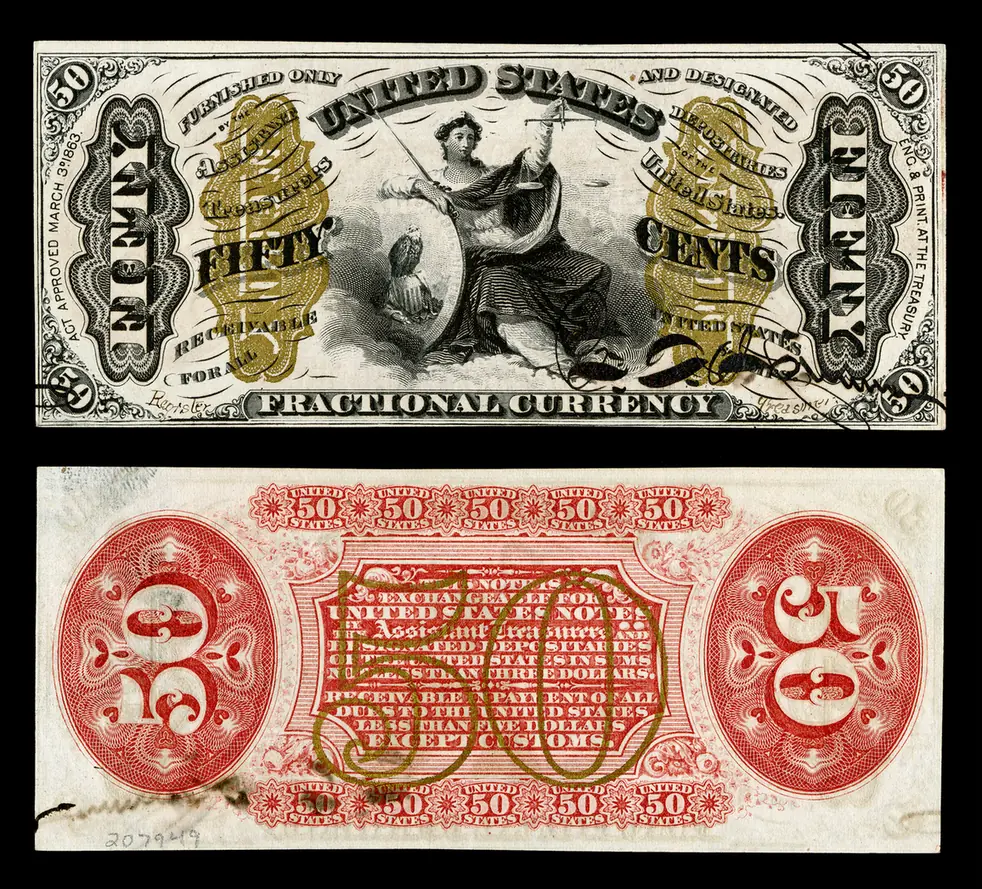
During the Civil War, coins nearly disappeared from daily life. People hoarded anything made of silver, and even copper cents became scarce. Making change was a real problem. The government’s solution was to print paper money worth less than a dollar, called fractional currency.
How It Started: Postage Currency
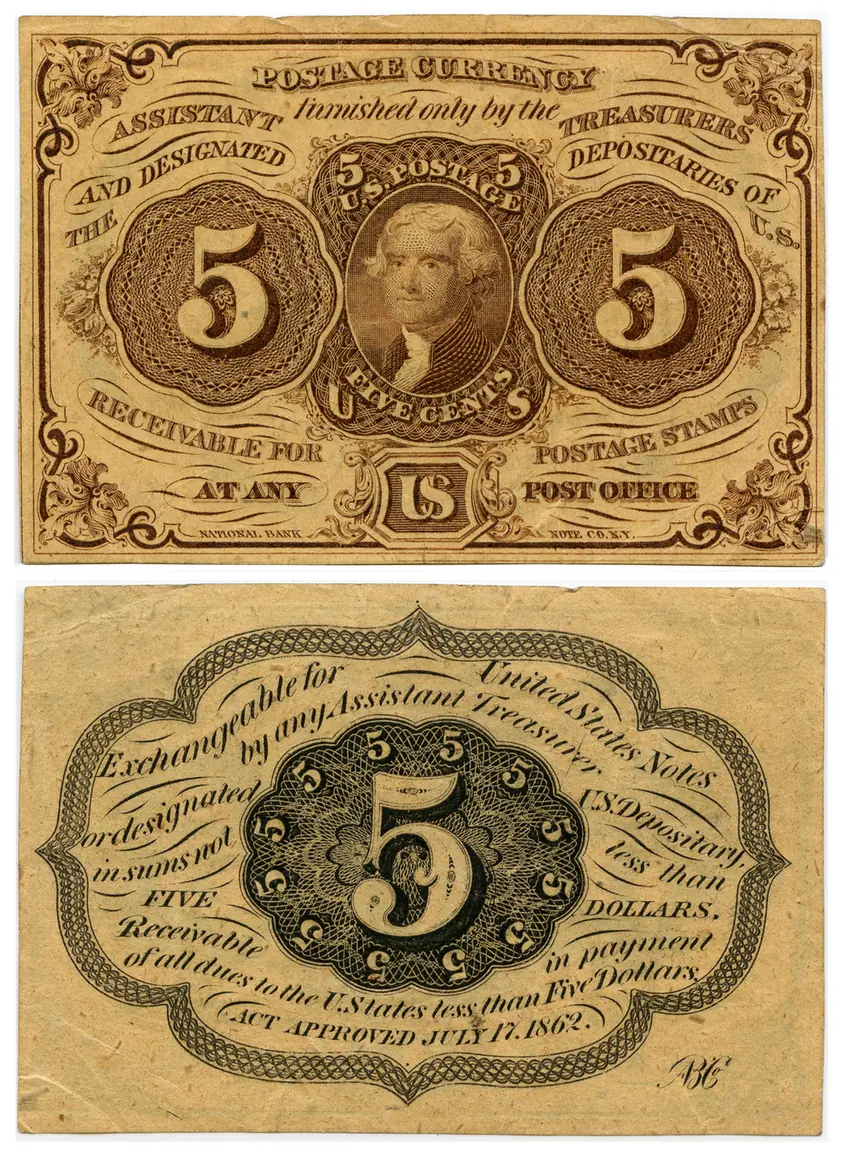
In 1862, people started using postage stamps as small change, but stamps got sticky and torn. The government responded by printing Postage Currency, small notes with images of postage stamps on them, in denominations of 5, 10, 25, and 50 cents. Some early notes even had perforated edges like stamps.
Five Issues from 1862 to 1876
Fractional currency was issued in five main series between 1862 and 1876, in denominations of:
- 3 cents
- 5 cents
- 10 cents
- 15 cents
- 25 cents
- 50 cents
The notes are small, often about the size of a modern business card or smaller.
A Famous Controversy
One 5-cent note showed the portrait of Spencer M. Clark, the head of the Treasury’s currency bureau, who put his own picture on it. Congress was not amused. In 1866, it passed a law prohibiting the portrait of any living person on U.S. currency, a rule that still stands.
The End of Fractional Currency
As the economy recovered and silver coins returned to circulation in the 1870s, fractional currency was no longer needed. It was phased out by 1876, and the government later began redeeming the notes.
What Are They Worth?
Fractional currency is popular with collectors because it’s affordable and full of history:
- Common notes in worn condition are affordable.
- Crisp notes with good margins are worth more. Because the notes were cut by hand, margins vary a lot.
- Scarce varieties, like certain signature combinations or notes with special backgrounds, are worth more.
- Specimen notes, printed one side at a time for collectors, are popular too.
Taking Care of Them
These notes are small and delicate. Keep them flat in paper money sleeves, and don’t tape, iron, or wash them.
More guides: Confederate money, two- and three-cent pieces, National Bank Notes.
The Bottom Line
Fractional currency was paper money worth 3 to 50 cents, created because coins vanished during the Civil War. Every note is a small piece of history, and crisp notes and scarce varieties are worth more.
Have old paper money? JoCo Coin Shop offers honest, no-obligation appraisals across the Kansas City area. Contact me by phone, text, or email to get started.