1982 Pennies: Copper or Zinc? How to Tell the 7 Varieties
In 1982 the penny changed from copper to zinc. Here's how to tell the difference with a simple scale, and what the seven 1982 varieties are.
1982 is one of the most interesting years for the Lincoln cent. Partway through the year, the U.S. Mint changed the penny from mostly copper to mostly zinc. On top of that, the Mint used two different sizes of numbers in the date. The result is seven different versions of the 1982 cent.
Here’s how to tell what you have.
Why the Penny Changed
By the early 1980s, the copper in a penny was worth close to one cent. To save money, the Mint switched from a 95% copper alloy to a zinc core with a thin copper plating (97.5% zinc and 2.5% copper overall). The new cents look the same on the outside, but they’re lighter.
- Copper cent: 3.11 grams
- Zinc cent: 2.50 grams
Because both kinds were made in 1982, you can’t tell them apart by date alone.
The Easy Test: Weigh It
A small digital scale that reads to 0.01 grams is all you need. A 1982 cent that weighs about 3.1 grams is copper. One that weighs about 2.5 grams is zinc. Worn or damaged coins may be a little lighter, but the difference is big enough to see easily.
Some people use the “drop test,” listening for a higher ring from copper and a duller sound from zinc. It works with practice, but a scale is more reliable.
Large Date vs. Small Date
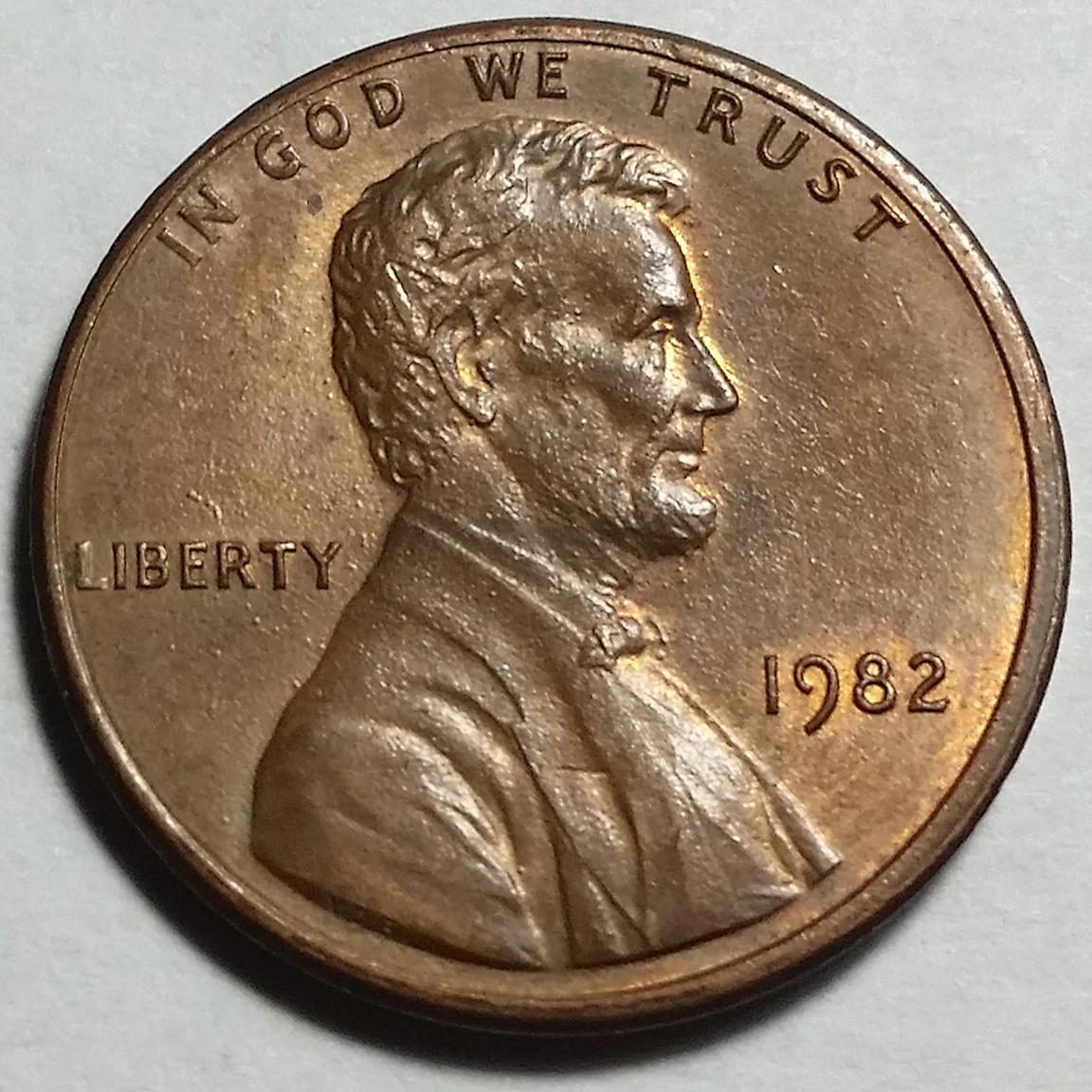
The Mint also changed the style of the numbers in the date during 1982. The Large Date numbers are taller and bolder. The Small Date numbers are shorter and thinner. The difference is easy to miss on one coin by itself, so placing your coin next to a known example of each is the easiest way to tell.
The Seven 1982 Varieties
Philadelphia (no mint mark):
- Large Date, copper
- Small Date, copper
- Large Date, zinc
- Small Date, zinc
Denver (D mint mark):
- Large Date, copper
- Large Date, zinc
- Small Date, zinc
A 1982-D Small Date on a copper planchet wasn’t supposed to exist. At least one has been found, and it’s a major rarity, so it’s worth checking any 1982-D Small Date you come across.
Are 1982 Pennies Worth Anything?
In circulated condition, almost all of them are worth one cent. Collectors who want a complete set look for bright, uncirculated examples of each variety, which are worth a small premium.
Zinc Pennies Can Corrode
Zinc cents sometimes develop bubbles, blisters, or dark spots where the copper plating has broken down. That’s corrosion, not a mint error, and it doesn’t add value.
More on Lincoln cents: are wheat pennies worth anything?, valuable Lincoln Memorial pennies, the 1955 doubled die, and the 1943 copper penny.
More guides: 2009 Lincoln penny designs.
The Bottom Line
1982 cents come in seven varieties: copper or zinc, large or small date, and Philadelphia or Denver. A simple scale tells copper from zinc in seconds. Most are worth face value, but they make a fun set, and a 1982-D Small Date copper would be a real find.
Found something unusual? JoCo Coin Shop offers honest, no-obligation appraisals across the Kansas City area. Contact me by phone, text, or email to get started.