The 1955 Doubled Die Penny: How to Spot the Real One
The 1955 doubled die penny is one of the most famous U.S. error coins. Here's how to recognize a real one and avoid fakes and look-alikes.
If there’s one error coin that almost everyone has heard of, it’s the 1955 doubled die Lincoln cent. The doubling is so strong you can see it without a magnifying glass, and the story of how it got into circulation is part of what makes it famous.
It’s also one of the most faked and most misunderstood coins out there. Here’s how to tell a real one from a look-alike.
What Happened in 1955
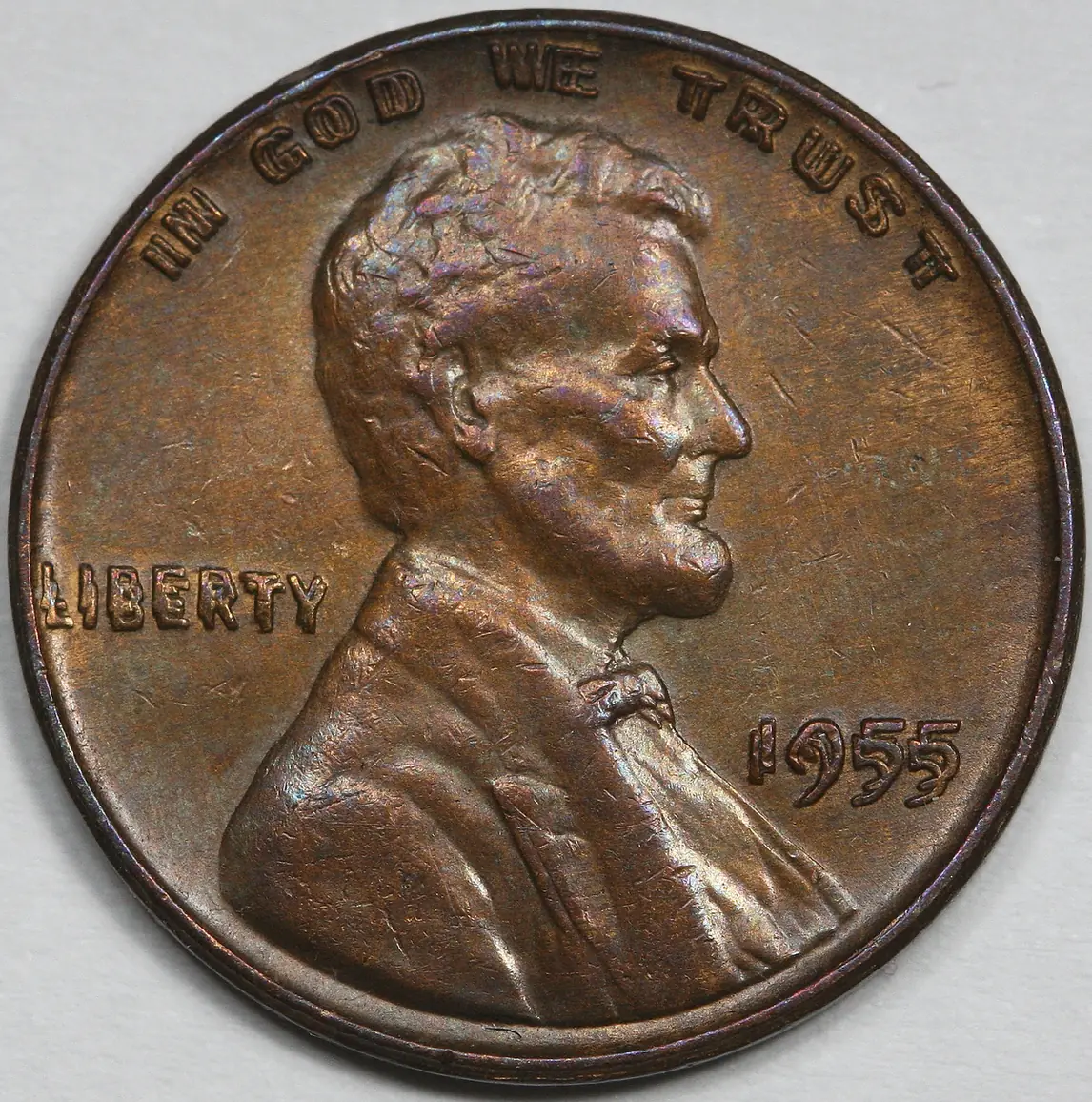
U.S. coins are struck by dies, and those dies are made by pressing a design into steel with a tool called a hub. To get a full, deep design, the die was pressed more than once. In 1955, one obverse (front) die at the Philadelphia Mint got pressed twice with the hub slightly out of line. Every coin struck by that die came out with a doubled design.
Mint workers noticed the problem after a batch of the coins had already been mixed in with normal ones. Rather than destroy the whole batch, the Mint released them. An estimated 20,000 to 24,000 doubled die cents went into circulation, many of them in the Northeast, where some reportedly were given out as change in cigarette packs from vending machines.
How to Recognize the Real One
A genuine 1955 doubled die has:
- No mint mark. It was made in Philadelphia, so there’s no D or S under the date.
- Strong doubling on the date “1955.” Both 5s show a clear second image.
- Strong doubling on LIBERTY and IN GOD WE TRUST. The letters look thick and “shadowed,” with two complete outlines.
- Rounded doubling. The second image has the same rounded shape as the first, just shifted.
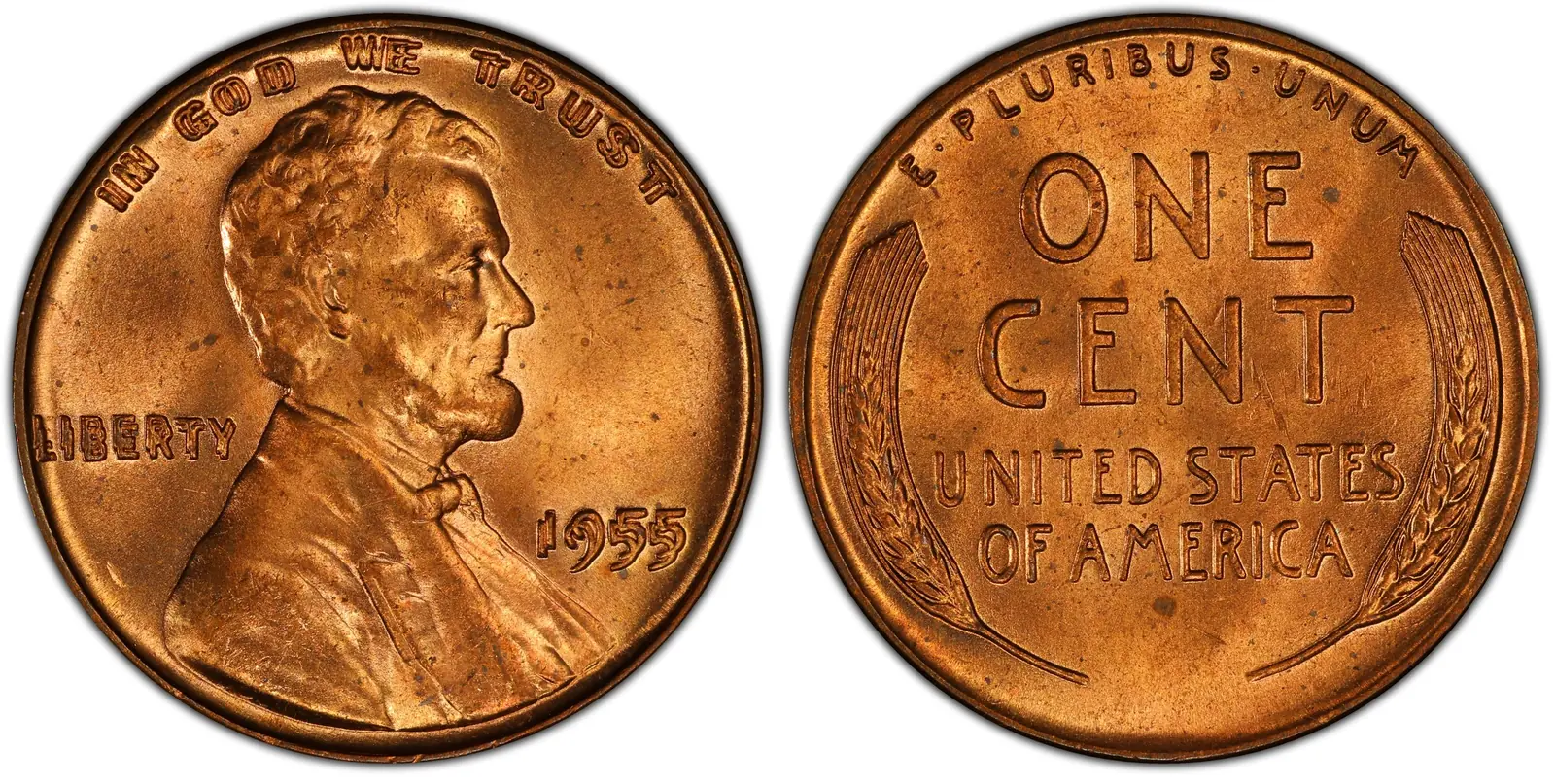
- No doubling on the back. Only the front die was doubled.
The doubling on a real one is dramatic. If you need a strong magnifier to maybe see it, it isn’t the famous variety.
The Look-Alikes
Machine Doubling
Many 1955 cents show a flat, shelf-like doubling, usually on the date or on part of the lettering. This is caused by the die bouncing or shifting slightly as the coin is struck, not by a doubled die. It’s very common and doesn’t add value. I go into more detail in doubled die vs. machine doubling.
The 1955 “Poor Man’s Doubled Die”
You may see this name online. It usually refers to 1955 cents with doubling from a worn die or machine doubling. They’re interesting, but they’re not the same coin and don’t carry the same value.
Counterfeits
Because the real coin is valuable, fakes are common, especially online. Some are cast copies with mushy detail; others are better struck fakes. Buying from a stranger online based on a photo is risky with this coin.
What’s It Worth?
A genuine 1955 doubled die is valuable even in worn condition, and bright, uncirculated ones with original red color sell for much more. The value depends heavily on condition and on whether the coin is authentic. For a coin like this, having it authenticated and graded by PCGS or NGC usually makes sense before selling.
What to Do If You Think You Have One
- Don’t clean it. Handle it by the edges.
- Check for a mint mark. If there’s a D or S under the date, it’s not the variety.
- Compare it to photos of known genuine examples, like the one above.
- Get it looked at in person by someone who knows the variety.
More guides: wheat pennies, state quarters, the grading scale.
The Bottom Line
The real 1955 doubled die is unmistakable: no mint mark, and bold, rounded doubling on the date and lettering. Most 1955 pennies with “a little doubling” are machine doubling, which is common and adds no value. If you’re not sure which you have, it’s worth getting a second set of eyes on it.
Think you have a 1955 doubled die? JoCo Coin Shop offers honest, no-obligation appraisals across the Kansas City area. Contact me by phone, text, or email to get started.