The CC Mint Mark: Why Carson City Morgan Dollars Are Worth More
Why are coins with a 'CC' mint mark worth so much? Explore the history of the Carson City Mint and how to spot valuable CC Morgan Silver Dollars.
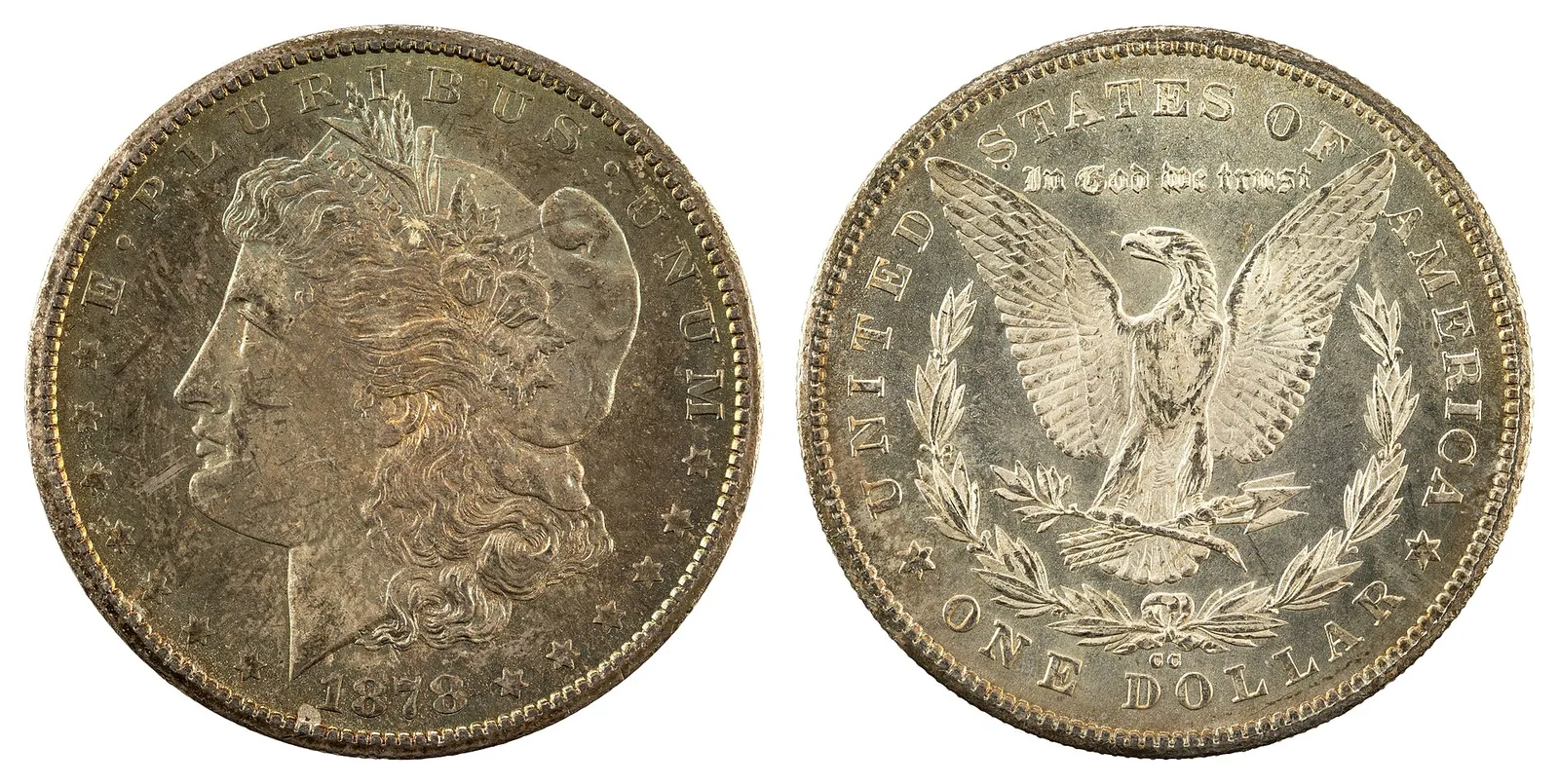
When a customer brings a stack of old silver dollars into our shop, the very first thing we do is flip each coin over and look just below the wreath, right above the letters D and O in the word DOLLAR.
If that space is blank, the coin was struck in Philadelphia. If there is an O, it came from New Orleans; an S means San Francisco; and a D (on 1921 issues) means Denver.
But when two tiny letters—CC—appear in that spot, the entire conversation changes. Those two letters stand for the legendary Carson City Mint in Nevada, and even in worn condition, a true “CC” coin carries an immediate, substantial collector premium over ordinary silver dollars.
Born from the Comstock Lode Silver Boom
In 1859, prospectors in the rugged mountains of western Nevada discovered the Comstock Lode, the first major silver discovery in the United States and one of the richest ever found. Within a few years, frontier boomtowns like Virginia City were pulling tens of millions of dollars’ worth of silver and gold out of the earth.
At the time, raw silver bullion had to be hauled by stagecoach and pack mule over the treacherous Sierra Nevada mountains to San Francisco to be minted into coins—a journey plagued by blizzards, bandits, and steep freight costs. Local miners and Nevada politicians petitioned Congress for a branch mint right at the source of the silver.
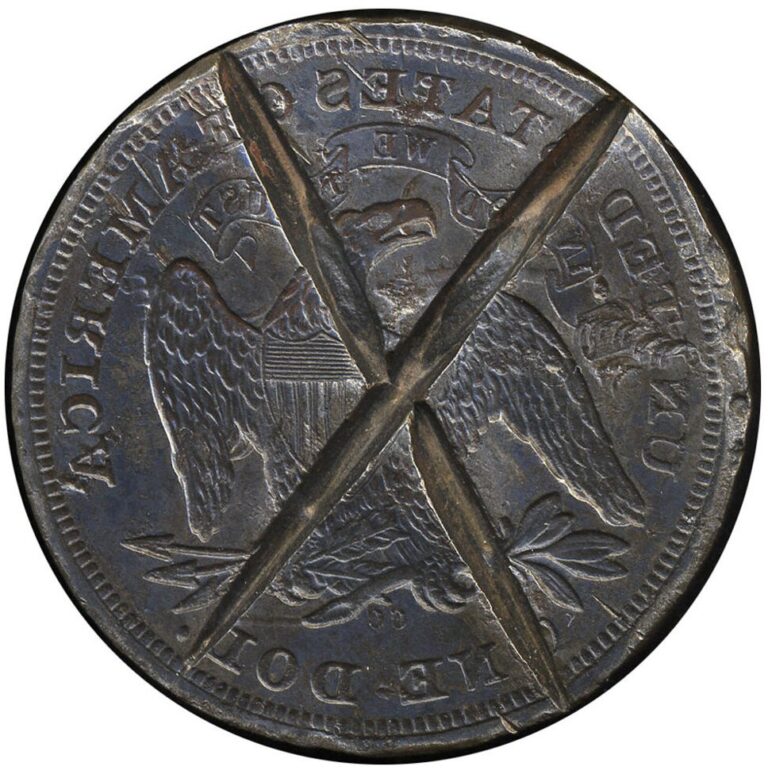
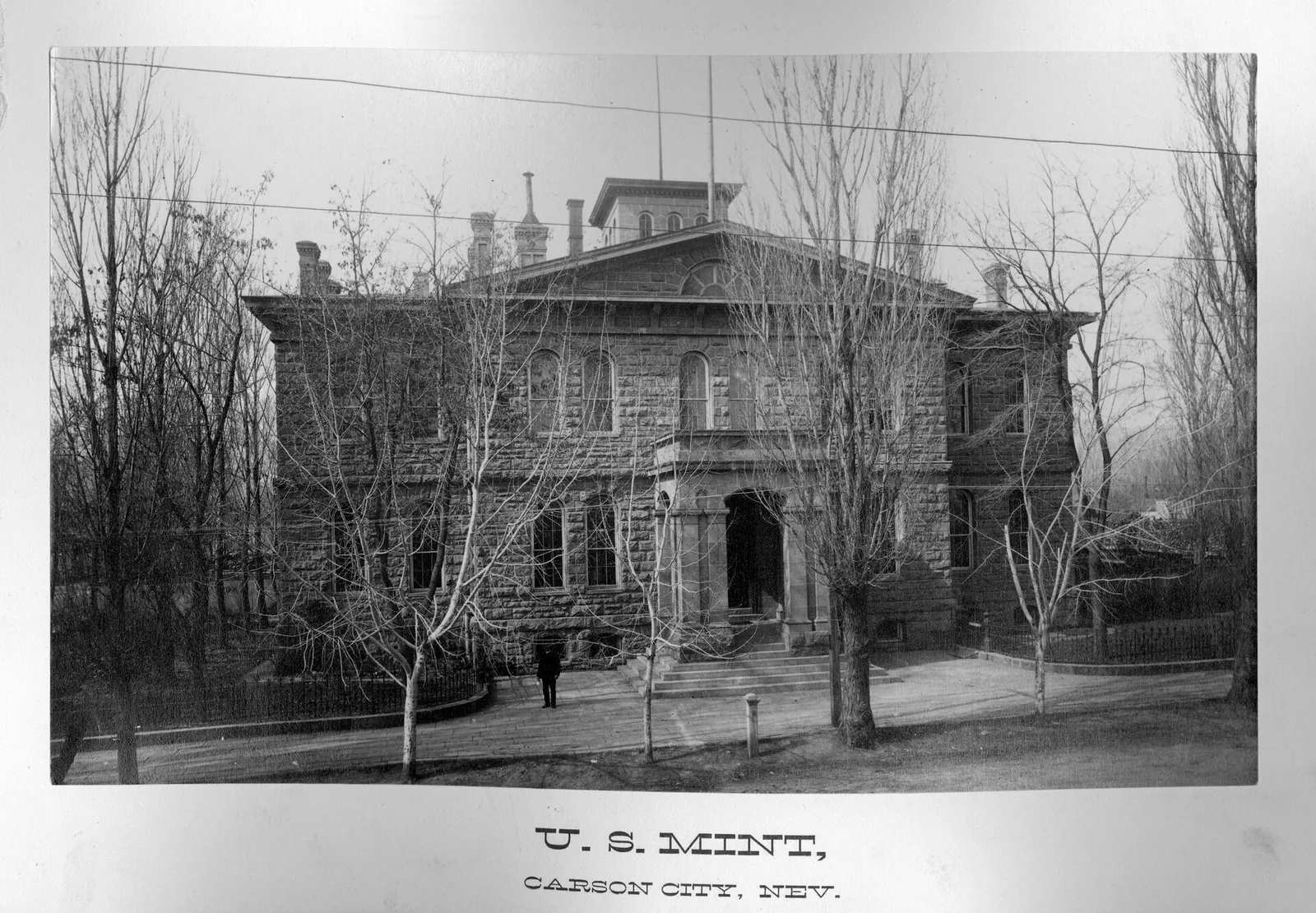
Congress approved the facility in 1863, and the Carson City Mint officially began striking coins in 1870. (One of the mint’s very first dollar dies survives today; read the story of the cancelled 1870-CC dollar die.) Over its relatively brief lifespan—striking coins from 1870 to 1885, pausing for three years, and finishing its final run from 1889 to 1893—the frontier facility produced Seated Liberty dimes, twenty-cent pieces, quarters, halves, and dollars, Trade dollars, $5, $10, and $20 gold pieces, and most famously, Morgan Silver Dollars.
Why Are “CC” Morgan Dollars Worth So Much?
The Carson City Mint struck Morgan Silver Dollars in only 13 calendar years: 1878 through 1885, and 1889 through 1893.
Compared to the massive urban mints in Philadelphia, San Francisco, and New Orleans—which routinely cranked out 5 million to 20 million silver dollars a year—Carson City was a small frontier operation. Every single “CC” Morgan dollar date had a relatively low mintage, ranging from a high of about 2.3 million coins in 1890-CC down to just 228,000 coins in 1885-CC.
Even more remarkably, a large share of newly minted Carson City silver dollars were never even released into circulation at the time. Instead, they were sewn into 1,000-coin canvas bags and stacked inside dusty U.S. Treasury vaults in Washington, D.C., where they sat forgotten for nearly eighty years.
The Famous GSA Hoard of the 1970s
In the early 1960s, before the government stopped redeeming Silver Certificates for physical silver dollars, citizens flooded the Treasury building in Washington to trade $1 paper bills for $1 silver coins at face value. As clerks reached the back walls of the vaults, they uncovered nearly 3 million uncirculated Carson City Morgan Dollars still sitting in their original 1880s canvas mint bags.
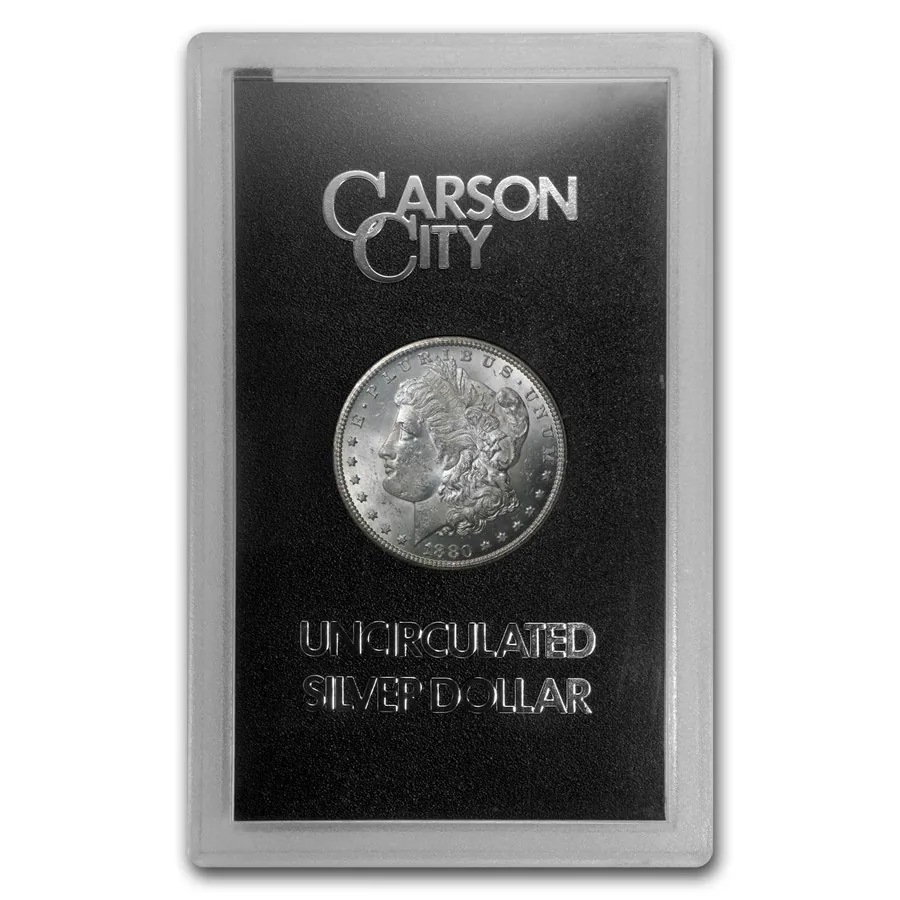
Instead of handing those rare “CC” dollars out at $1 apiece, the Treasury halted distribution. Between 1972 and 1980, the General Services Administration (GSA) sealed those brilliant uncirculated Carson City dollars inside hard black plastic display holders and sold them directly to the American public via mail-order auctions, packed in blue cardboard boxes with a certificate card.
What to Do If You Have a GSA Carson City Dollar
If you have a Carson City Morgan dollar sealed inside one of those black plastic GSA holders, never crack it out of the black plastic case. Collectors pay a strong premium for coins that remain sealed in their original 1970s GSA holders with their original box and card intact.
Key Carson City Dates to Watch For (And Counterfeits to Avoid)
While every genuine Carson City coin is desirable, three Morgan dollar dates stand at the top of the list:
- 1889-CC: Only 350,000 were minted, and most of the mintage is believed to have been melted, likely under the Pittman Act of 1918. Even a heavily worn, problem-free 1889-CC typically brings well over $1,000.
- 1893-CC: The final year of Carson City production (677,000 minted), prized in all grades.
- 1885-CC: The lowest mintage of the Carson City Morgan series (just 228,000 struck), though many survived in uncirculated condition inside the GSA hoard.
A Warning on Counterfeits: Because the “CC” mint mark adds so much value, Carson City coins are among the most heavily counterfeited U.S. coins on online marketplaces and flea markets. We routinely test fake “CC” dollars that fail weight checks (a real Morgan dollar weighs 26.73 grams and is never magnetic; more on silver weights in our junk silver guide) or feature altered mint marks where a genuine coin had a fake “CC” glued or soldered onto the reverse.
The bottom line
Checking the back of your silver dollars (especially in an inherited collection) for that iconic “CC” mint mark takes just a few seconds, and finding one is always exciting. Whether your Carson City coin is a well-worn frontier survivor or a pristine uncirculated piece in a black GSA box, it represents a legendary chapter of Wild West history—and commands serious value at the coin counter.
Have a coin like this? JoCo Coin Shop offers honest, no-obligation appraisals across the Kansas City area. Contact us by phone, text, or email to get started.