Are Silver Certificates Worth Anything? A Guide to Old Blue Seal Dollars
Have an old blue seal dollar bill? Learn what silver certificates are, which ones are worth more than face value, and what to look for.
Old dollar bills with a blue seal and the words “SILVER CERTIFICATE” across the top turn up in wallets, Bibles, and dresser drawers all the time. People are often surprised to learn they were once redeemable for actual silver. So what are they worth today?
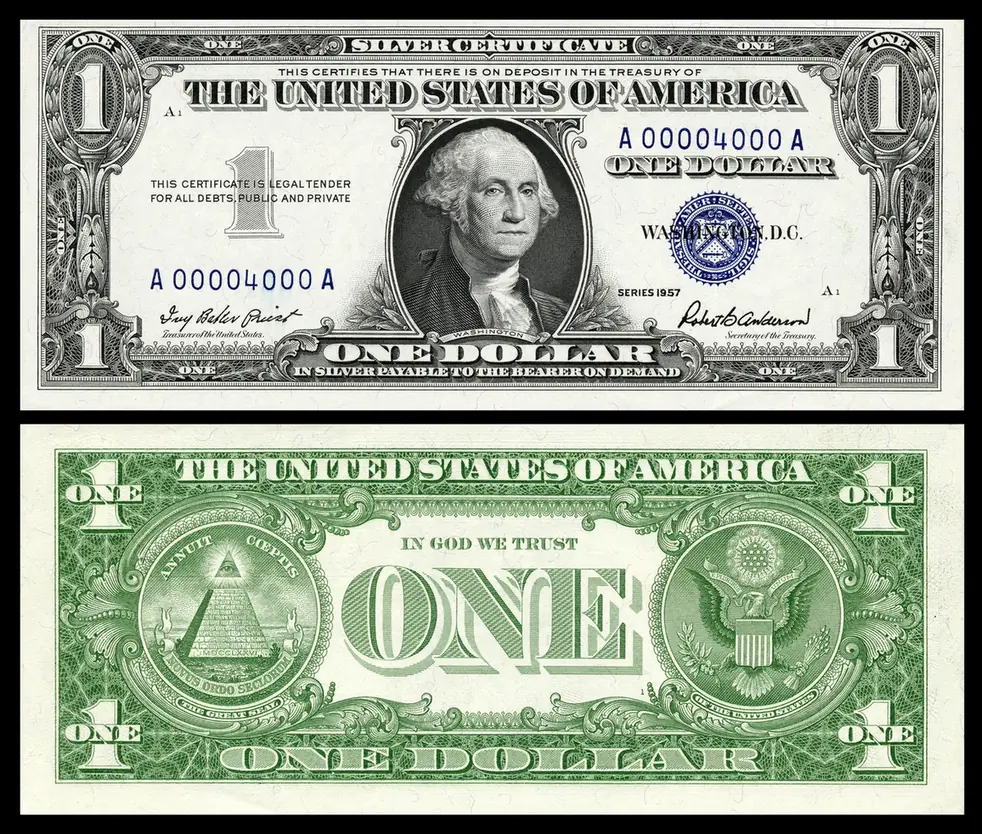
What Is a Silver Certificate?
Silver certificates were a type of U.S. paper money issued from 1878 to 1964. The wording on the note promised that silver was on deposit in the Treasury, payable to the bearer. For a while, you really could trade them in for silver dollars, and later for silver bullion.
That ended in 1968. After June 24, 1968, silver certificates could no longer be exchanged for silver. They’re still legal tender, so a bank will take them at face value, but for most notes, a collector will pay more.
Small Size vs. Large Size
Small-size notes (1928 to 1964)
These are the same size as today’s money and are by far the most common. Most were issued as $1 bills, with $5 and $10 notes also made. You’ll see series dates like 1928, 1934, 1935 (with letters like 1935A through 1935H), and 1957.
Large-size notes (1878 to 1923)
Older silver certificates are noticeably bigger than modern bills, which is why collectors call them “horse blankets.” These are worth considerably more than small-size notes, even when they’re worn.
Which Ones Are Worth More?
Most worn 1935 and 1957 $1 silver certificates are worth only a little more than face value. They were printed in huge numbers. But several things can make a note worth more:
- Condition: A crisp, uncirculated note with no folds is worth much more than a worn one.
- Star notes: If there’s a small star (★) at the beginning or end of the serial number, it’s a replacement note. Star notes are scarcer, and some are quite valuable.
- 1928 and 1934 $1 notes: These are nicknamed “funnybacks” because of their unusual back design. They’re scarcer than the later notes.
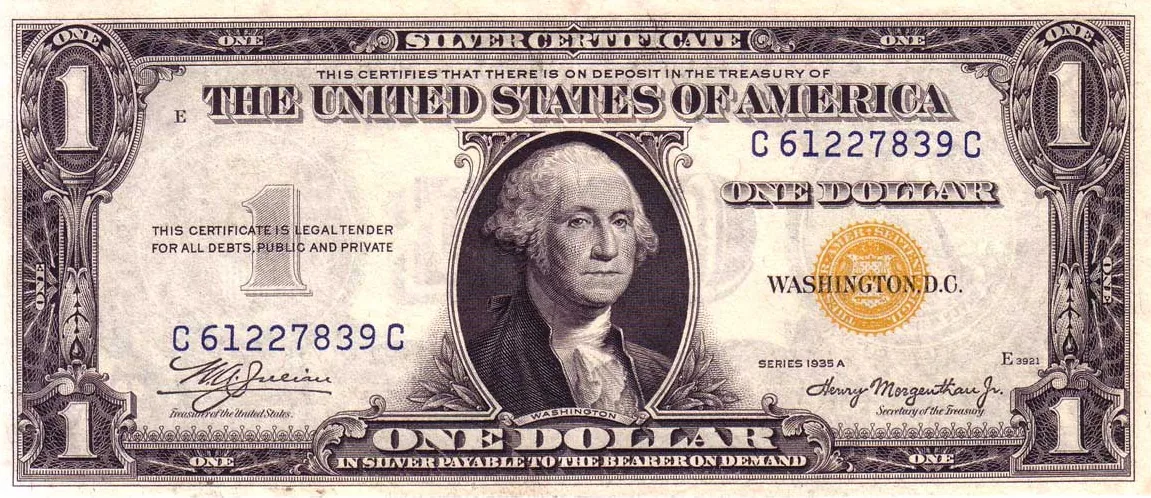
- World War II notes: In 1942, special notes were made for Hawaii (with HAWAII printed on them and a brown seal) and for troops in North Africa and Europe (with a yellow seal). Both are popular with collectors.
- The 1935G “no motto” notes: Some 1935G notes don’t have IN GOD WE TRUST on the back, and they’re scarcer than the ones that do.
- Fancy serial numbers: Numbers like 00000007 or 12345678 can bring a premium.
- Large-size notes: Any silver certificate from before 1929 is worth a closer look.
How to Take Care of Old Notes
- Don’t fold, iron, or wash them. Flattening or cleaning a note is easy to spot and lowers the value.
- Don’t tape tears. Tape damages paper money.
- Keep them flat in a paper money sleeve or between pages of a book, away from moisture.
If you want to learn how collectors grade notes, see my paper money grading guide.
More guides: gold certificates, $2 bills, National Bank Notes, fractional currency.
The Bottom Line
Most silver certificates are common and worth a small premium over face value, especially if they’ve been folded and carried. Crisp notes, star notes, World War II notes, funnybacks, and large-size notes are the ones worth a closer look.
Have old paper money? JoCo Coin Shop offers honest, no-obligation appraisals across the Kansas City area. Contact me by phone, text, or email to get started.