Liberty Head vs. Saint-Gaudens: A Guide to $20 Gold Double Eagles
The $20 gold double eagle came in two designs: Liberty Head and Saint-Gaudens. Here's how to tell them apart, the types and key dates, and what to know.
For more than 80 years, the largest regular U.S. gold coin was the $20 double eagle. These big gold coins turn up in inherited collections, safe deposit boxes, and family jewelry more often than you’d think, and they come in two very different designs: the Liberty Head and the Saint-Gaudens.
Here’s how to tell them apart and what makes some worth more than others.
The Basics: What’s in a Double Eagle
Both designs share the same specifications:
- Face value: $20 (twice the $10 “eagle,” hence “double eagle”)
- Composition: 90% gold, 10% copper
- Weight: about 33.44 grams
- Gold content: 0.9675 troy ounces of pure gold
That gold content means every genuine double eagle is worth at least its weight in gold, no matter how worn. See how spot prices work (the same idea applies to gold).
The Liberty Head Double Eagle (1849 to 1907)
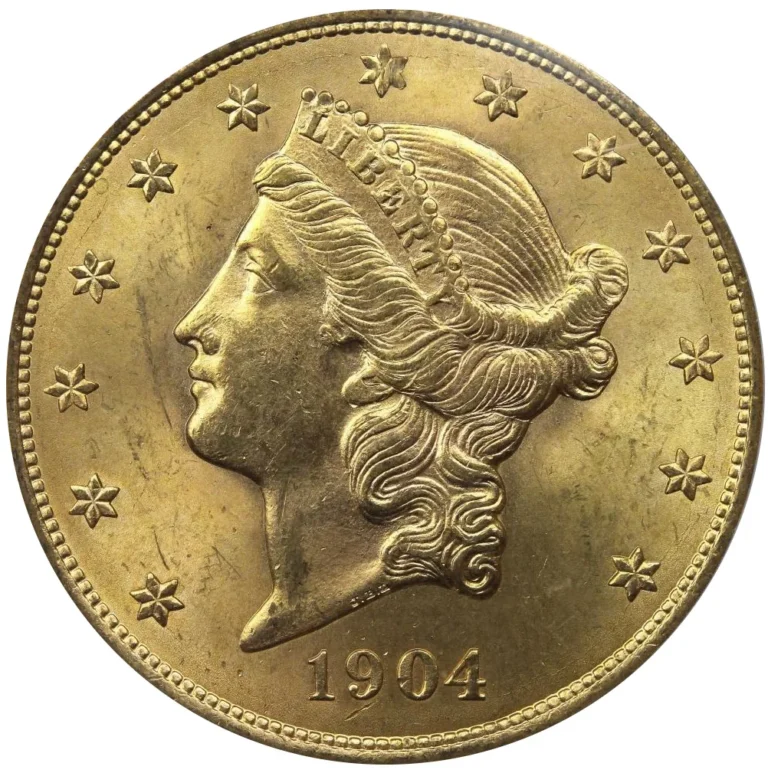
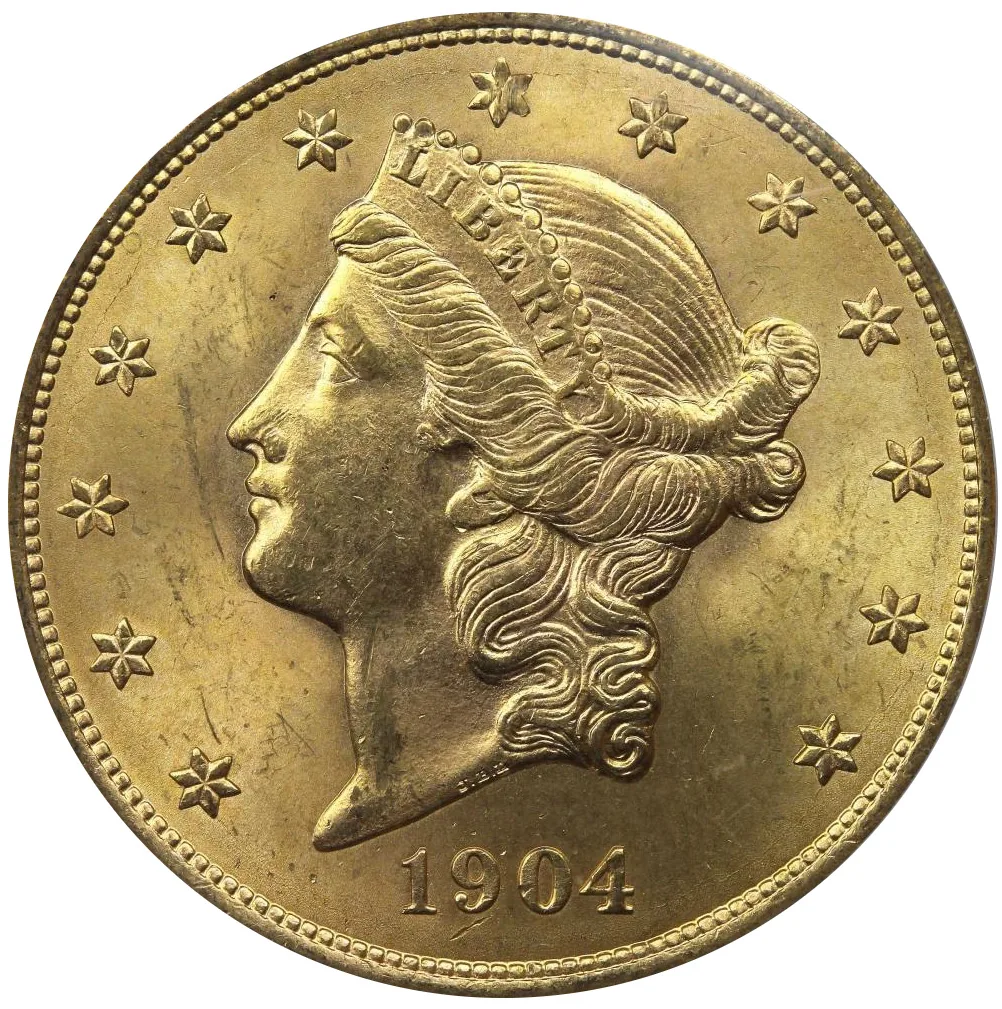
The first double eagle was designed by James B. Longacre, the Mint’s chief engraver, after the California Gold Rush brought huge amounts of gold to the Mint. Two proof pieces were made in 1849, and regular production began in 1850. The front shows a crowned head of Liberty, and the back shows a heraldic eagle with a shield.
There are three main types:
- Type 1 (1850 to 1866): No motto above the eagle.
- Type 2 (1866 to 1876): “IN GOD WE TRUST” added above the eagle. The value still reads TWENTY D.
- Type 3 (1877 to 1907): The value is spelled out as TWENTY DOLLARS.
Liberty double eagles were struck at Philadelphia, San Francisco, New Orleans, Denver, and Carson City. The “CC” double eagles from Nevada are especially popular with collectors, much like the Carson City Morgan dollars.
The Saint-Gaudens Double Eagle (1907 to 1933)
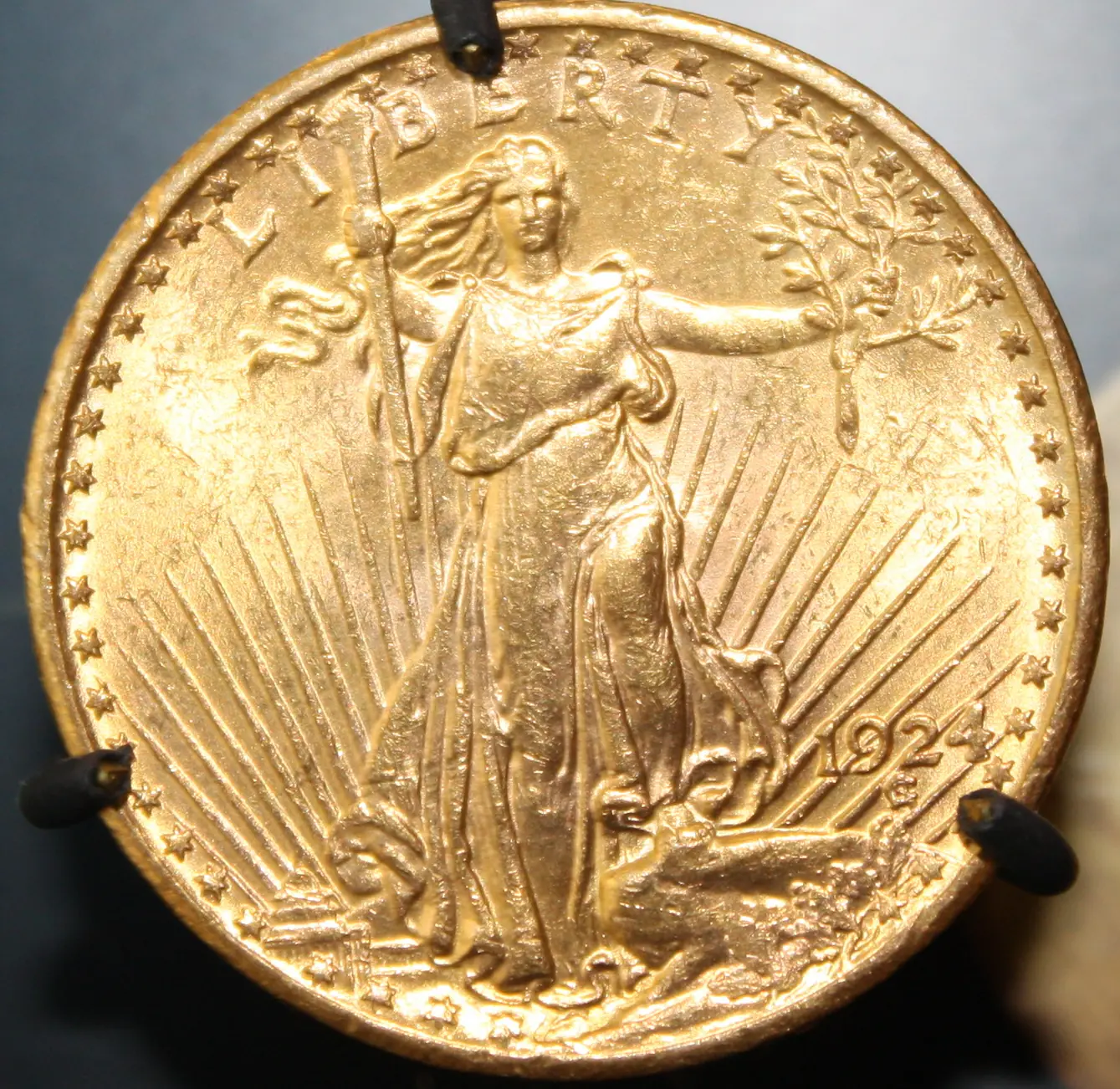
In 1904, President Theodore Roosevelt asked sculptor Augustus Saint-Gaudens to redesign American coinage. The result is often called the most beautiful U.S. coin: Liberty striding forward with a torch and olive branch on the front, and a flying eagle over a rising sun on the back.
Key points in its history:
- 1907 High Relief: The first coins had a deep, sculptural relief and a date in Roman numerals. They were hard to strike, and only 12,367 were made before the design was flattened. They’re highly prized today.
- 1907 to 1908 “No Motto”: Early regular coins left off “IN GOD WE TRUST.”
- 1908 to 1933 “With Motto”: By act of Congress, the motto was added in mid-1908.
The End of Gold Coinage and the 1933 Double Eagle
In 1933, President Franklin D. Roosevelt stopped gold coinage and ordered most gold coins turned in (coins with collector value were exempt). Most 1933 double eagles were melted before they were released. One that escaped, once owned by King Farouk of Egypt, sold at auction in 2021 for about $18.9 million, making it the most valuable coin ever sold at the time.
Owning gold bullion became legal again at the end of 1974, and old double eagles have been popular with both collectors and gold buyers ever since.
How to Tell Them Apart Quickly
- Liberty Head: A crowned profile of Liberty facing left, with stars around the edge. Eagle with a shield on the back.
- Saint-Gaudens: A full standing figure of Liberty with a torch. A flying eagle on the back.
What Makes One Worth More
- Date and mint mark. Most dates trade close to their gold value, often with a modest premium. A few, like many Carson City dates and some early San Francisco and New Orleans coins, are scarce and worth much more.
- Condition. Uncirculated coins with original luster bring more than worn ones.
- Problems. Coins that were used as jewelry, cleaned, or damaged are worth less to collectors, though they still have their gold value. See coins with holes or jewelry mounts.
Watch Out for Counterfeits
Double eagles are among the most faked U.S. coins, because the gold value makes them worth copying. Be careful with any double eagle offered online or at a price that seems too good. See my counterfeit warning signs and selling gold coins guides.
The Bottom Line
The Liberty Head double eagle (1849 to 1907) and the Saint-Gaudens (1907 to 1933) both contain nearly an ounce of gold. Most dates are valued mainly for that gold, while scarce dates, Carson City coins, and the 1907 High Relief carry big collector premiums. Leave them uncleaned and have them checked before you buy or sell.
Have a gold coin to identify? JoCo Coin Shop offers honest, no-obligation appraisals across the Kansas City area. Contact me by phone, text, or email to get started.