Shield Nickels (1866 to 1883): America’s First Five-Cent Nickel
The Shield nickel was the first U.S. five-cent coin made of nickel. Here's its history, the With Rays and No Rays types, and the key dates to look for.
Before the Buffalo nickel, and even before the Liberty “V” nickel, there was the Shield nickel. Made from 1866 to 1883, it was the first U.S. five-cent coin made of copper-nickel, and the first one people called a “nickel.”
It doesn’t get as much attention as later nickels, but it has a great story and a few genuinely scarce dates.
Why the Nickel Was Created
Before the Civil War, the U.S. five-cent coin was the small silver half dime. During the war, people hoarded silver and gold coins, and small change disappeared from circulation. The government filled the gap with paper “fractional currency,” but people wanted coins.
Industrialist Joseph Wharton, who had major nickel mining interests, lobbied Congress to use nickel in coins. In 1866, Congress approved a new five-cent coin made of 75% copper and 25% nickel, weighing 5 grams. That’s the same alloy and weight U.S. nickels still use today.
The silver half dime was made for a few more years, until the Mint Act of 1873 ended it.
The Design
The Shield nickel was designed by James B. Longacre, the Mint’s chief engraver (who also designed the Indian Head cent and the Liberty Head double eagle).
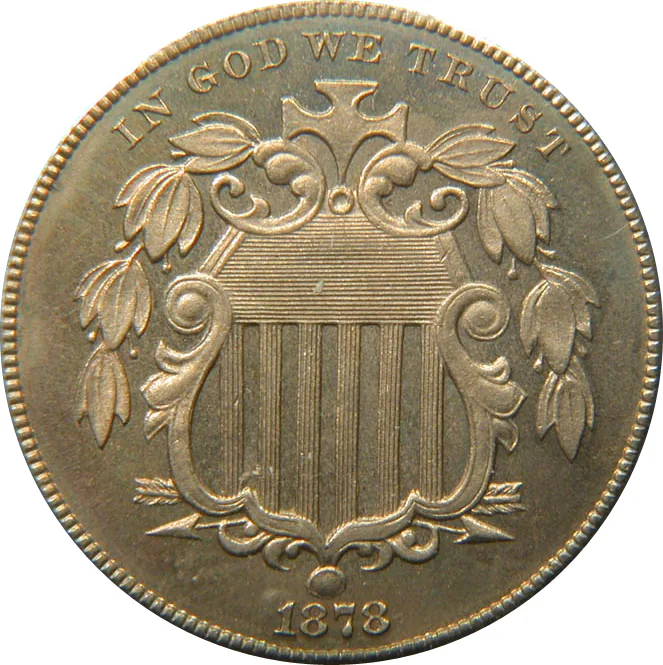
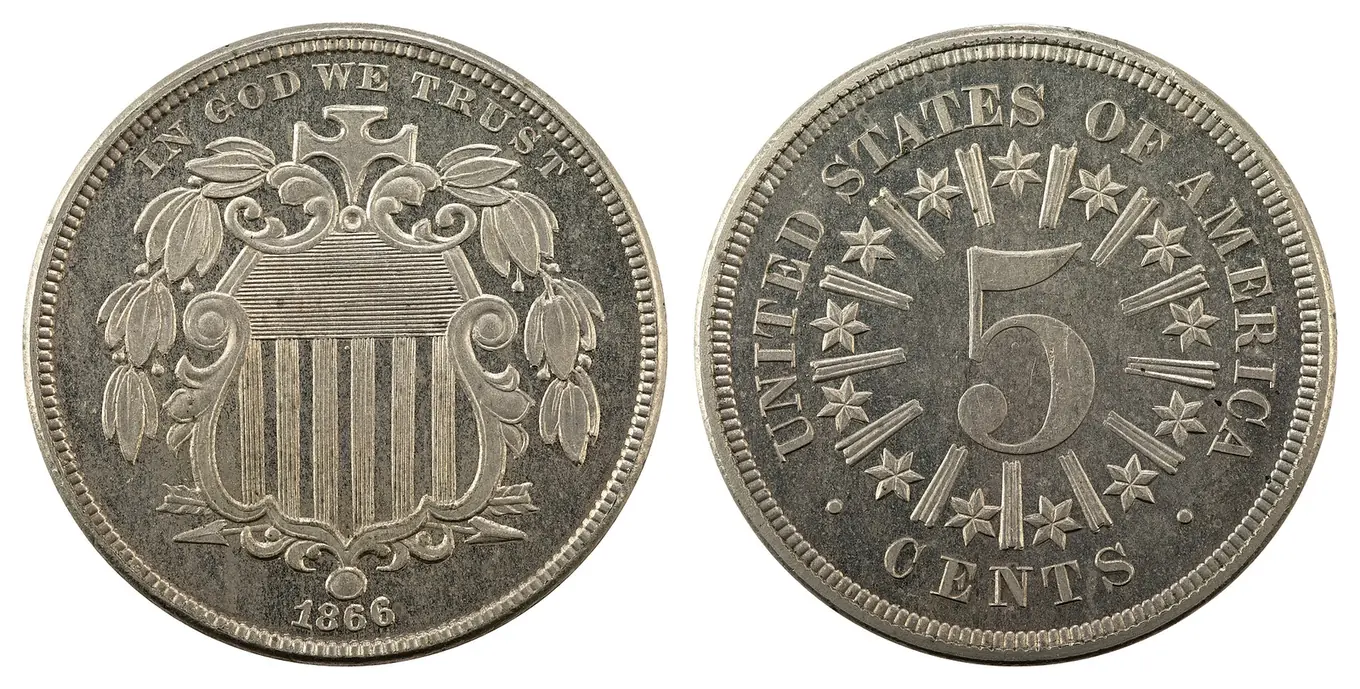
- Front: A shield topped with a cross, with crossed arrows and laurel branches, and IN GOD WE TRUST above.
- Back: A large numeral 5 surrounded by 13 stars.
The hard copper-nickel alloy was tough on dies, which wore out quickly, and the design didn’t always strike up well. Many Shield nickels show weak details or die cracks.
With Rays and No Rays
The first Shield nickels had rays between the stars on the back. The rays made the design even harder to strike, so they were removed early in 1867.
- 1866 With Rays: 14,742,500 made for circulation.
- 1867 With Rays: 2,019,000 made, much scarcer than the No Rays version.
- 1867 No Rays and later: No rays between the stars.
A With Rays coin is worth checking for, especially an 1867.
Key Dates to Look For
Production dropped sharply in the late 1870s and early 1880s because there was a glut of small change and the Treasury already had a big stock of nickels:
- 1880: Only 16,000 made for circulation. The rarest regular Shield nickel, especially in uncirculated condition.
- 1879: 25,900 made for circulation.
- 1881: 68,800 made for circulation.
- 1877 and 1878: Made only as proofs for collectors, with no circulation strikes. Any 1877 or 1878 Shield nickel is scarce.
- 1883/2 overdate: Made by reusing dies dated 1882, so traces of a 2 show under the 3.
Because the 1879, 1880, and 1881 had small business-strike mintages, proofs from those years (struck in larger numbers) are often what collectors end up buying.
What Most Shield Nickels Are Worth
Common dates like 1868 to 1876 and 1882 to 1883 are affordable in worn condition, and they’re a great way to own a coin from the 1860s and 1870s. Value goes up quickly with condition, and the key dates above carry real premiums.
Like most nickel coins, Shield nickels are often found dark, worn, or with corrosion. Please don’t clean them. A cleaned coin is worth much less to collectors. See should I clean my coins?
What Came Next
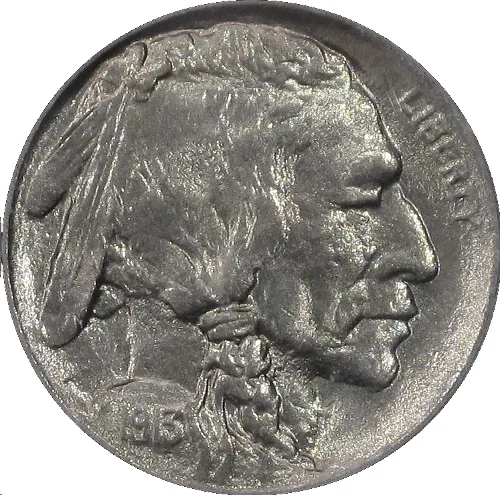
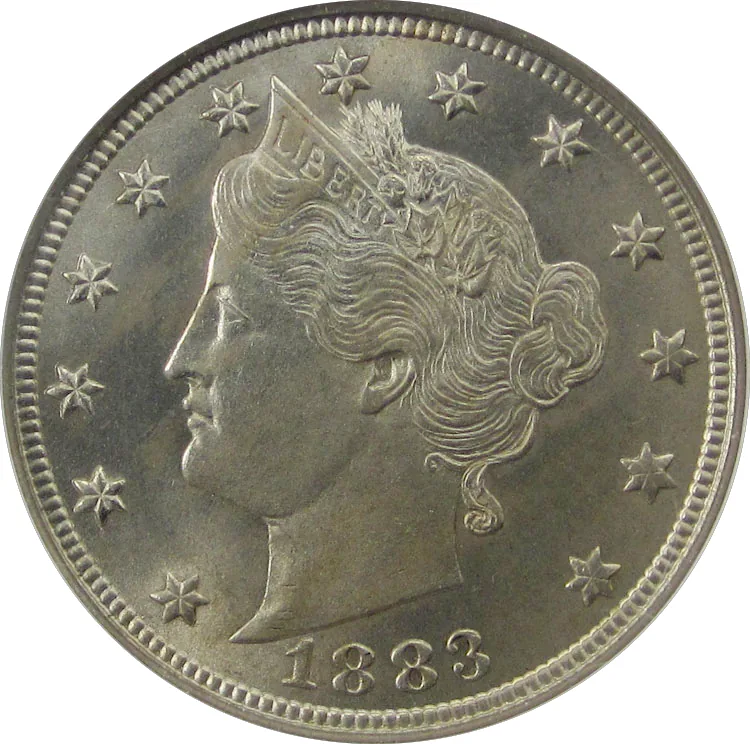
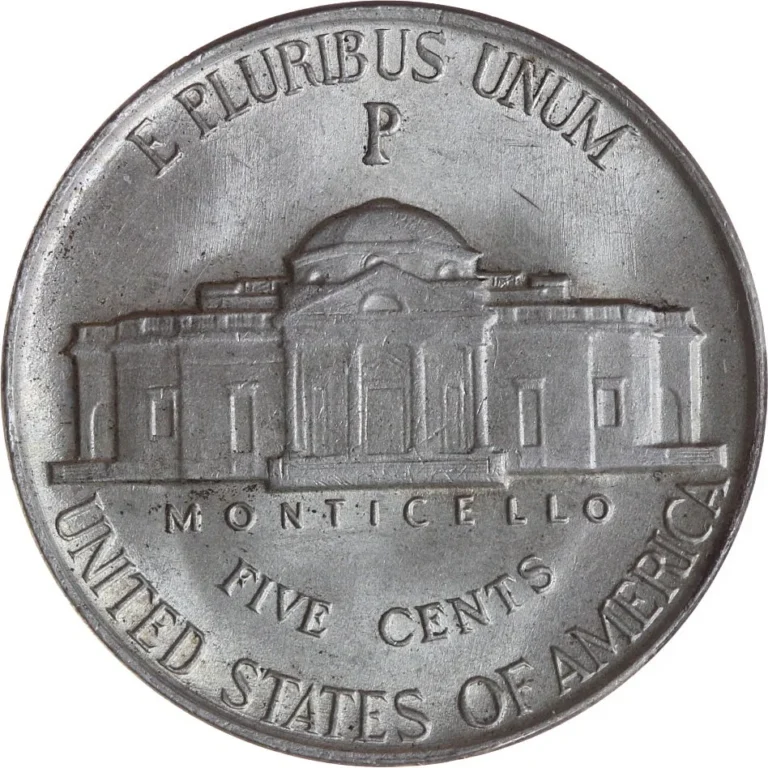
In 1883, the Shield nickel was replaced by Charles E. Barber’s Liberty Head “V” nickel, which was followed by the Buffalo nickel in 1913 and the Jefferson nickel in 1938.
More 1800s coins: two-cent and three-cent pieces, Seated Liberty coins, and large cents and half cents.
More guides: the twenty-cent piece.
The Bottom Line
The Shield nickel (1866 to 1883) was America’s first copper-nickel five-cent coin. Most dates are affordable, but watch for the 1867 With Rays, the low-mintage 1879, 1880, and 1881, the proof-only 1877 and 1878, and the 1883/2 overdate.
Have old nickels or 1800s coins? JoCo Coin Shop offers honest, no-obligation appraisals across the Kansas City area. Contact me by phone, text, or email to get started.