Wheat Penny Key Dates Checklist: What to Look For, 1909 to 1958
A printable checklist of wheat penny key dates, semi-keys, and the rare ones, with mintages, sorted by date. Use it to sort your wheat cents.
This page is a checklist. If I sent you here, we’ve already talked about how to sort your wheat pennies. This is the list of dates to pull out while you do it.
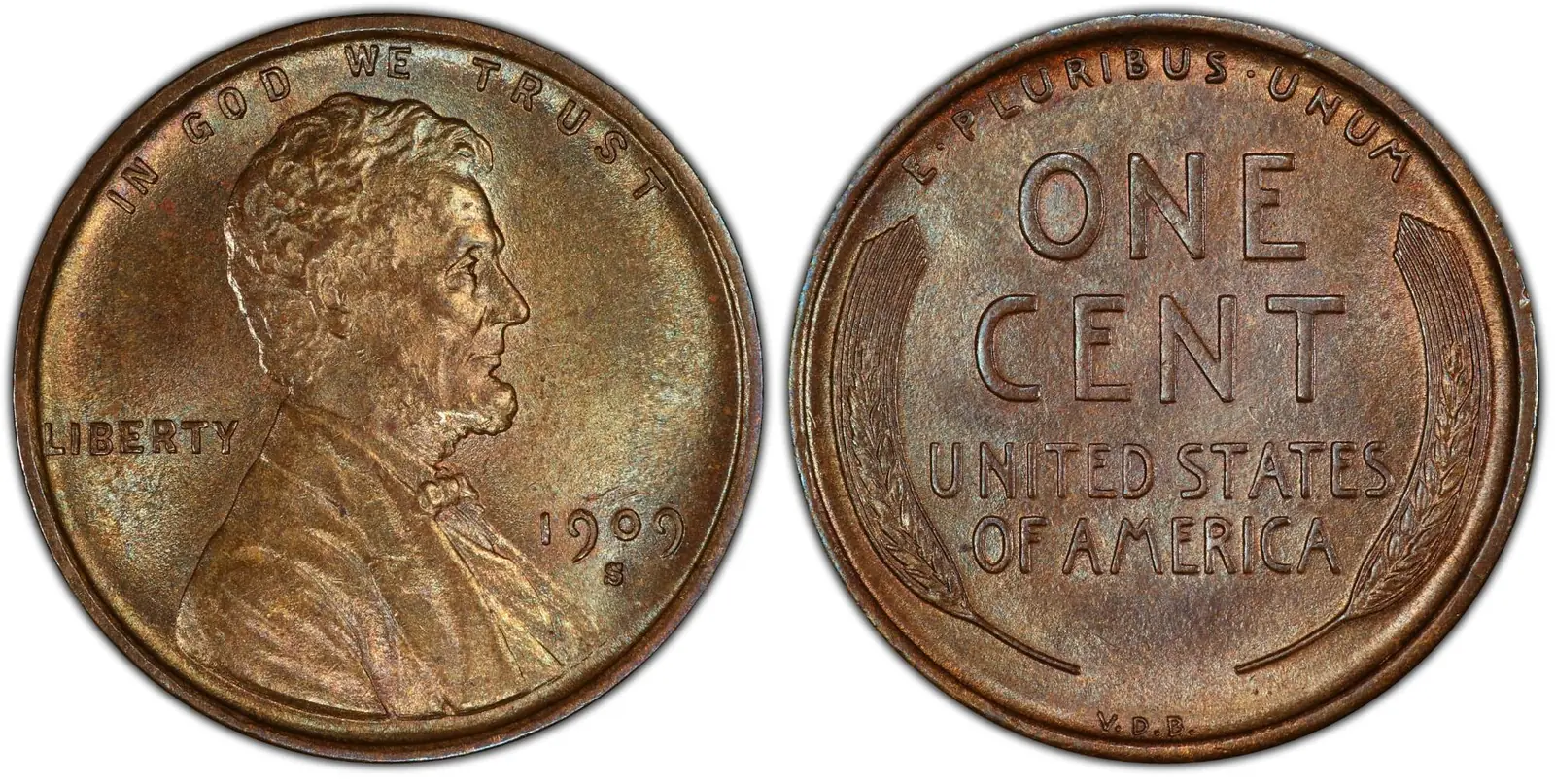
Keep it open on your phone, spread the coins out in good light, and check each date and mint mark against the lists below. The mint mark is the small D (Denver) or S (San Francisco) under the date. No letter means Philadelphia.
If you want the background first, start with my overview: Are Wheat Pennies Worth Anything?
The Big Ones
These are the key dates. If you find one, set it aside on its own and don’t clean it.
| Coin | Mintage | What to check |
|---|---|---|
| 1909-S VDB | 484,000 | S under the date and VDB on the bottom edge of the back |
| 1931-S | 866,000 | S under the date |
| 1914-D | 1,193,000 | D under the date |
| 1909-S | 1,825,000 | S under the date, no VDB on the back |
| 1922 “No D” | Part of 7,160,000 1922-D | No mint mark at all on a 1922 |
Every coin on this list has been faked, mostly by adding or removing a mint mark or changing a date. That’s normal and nothing to worry about. Just set the coin aside and let me look at it. More on the fakes: 1909-S VDB, 1922 No D, and added mint marks.
Semi-Key Dates
These aren’t as rare as the big ones, but they were made in small numbers and are worth pulling out. Sorted from lowest mintage to highest.
| Coin | Mintage |
|---|---|
| 1924-D | 2,520,000 |
| 1911-S | 4,026,000 |
| 1914-S | 4,137,000 |
| 1912-S | 4,431,000 |
| 1931-D | 4,480,000 |
| 1926-S | 4,550,000 |
| 1915-S | 4,833,000 |
| 1910-S | 6,045,000 |
| 1913-S | 6,101,000 |
| 1933-D | 6,200,000 |
| 1922-D | 7,160,000 |
| 1923-S | 8,700,000 |
| 1932 | 9,062,000 |
| 1912-D | 10,411,000 |
A simple rule: any wheat penny dated 1909 through 1933 with an S or D is worth a second look. Most of the scarce dates are in those years. Condition matters a lot for these. A sharp, original coin is worth much more than a worn-flat one.
The Famous Three: Extremely Rare
You’ve probably heard of these three. They’re the most famous wheat pennies. But be realistic: you are very, very unlikely to find one in a jar or in change. Only a few dozen of the first two are known to exist anywhere, and collectors have been hunting for the third since 1955. The fakes far outnumber the real ones.
| Coin | How many exist | What to check |
|---|---|---|
| 1943 copper | About 20 to 30 known, across all three mints | A 1943 that is copper colored and does not stick to a magnet |
| 1944 steel | A few dozen known, across all three mints | A 1944 that is silver gray and does stick to a magnet |
| 1955 Doubled Die | About 20,000 to 24,000 released in 1955, mostly in the Northeast; far fewer survive today | Date and lettering on the front are doubled so strongly you can see it without a magnifier |
Nearly every “copper 1943” turns out to be a steel cent plated with copper, or a 1948 with the 8 filed into a 3. Nearly every “1955 doubled die” is a common 1955 with machine doubling, which looks flat and shelf-like instead of a clean second image. Still, if you think you have one, set it aside and show me. More on these: 1943 copper fakes and the 1955 doubled die.
Full Checklist, in Date Order
Every coin from this page in one list, sorted by date and then mint mark (no mint mark, then D, then S). Print it or keep it open on your phone while you sort.
| Coin | Mintage | Notes |
|---|---|---|
| 1909-S | 1,825,000 | Key date. S under the date, no VDB on the back |
| 1909-S VDB | 484,000 | Key date. S under the date and VDB on the bottom edge of the back |
| 1910-S | 6,045,000 | Semi-key |
| 1911-S | 4,026,000 | Semi-key |
| 1912-D | 10,411,000 | Semi-key |
| 1912-S | 4,431,000 | Semi-key |
| 1913-S | 6,101,000 | Semi-key |
| 1914-D | 1,193,000 | Key date. D under the date |
| 1914-S | 4,137,000 | Semi-key |
| 1915-S | 4,833,000 | Semi-key |
| 1922 “No D” | Part of the 1922-D total | Key date. No mint mark at all on a 1922 |
| 1922-D | 7,160,000 | Semi-key |
| 1923-S | 8,700,000 | Semi-key |
| 1924-D | 2,520,000 | Semi-key |
| 1926-S | 4,550,000 | Semi-key |
| 1931-D | 4,480,000 | Semi-key |
| 1931-S | 866,000 | Key date. S under the date |
| 1932 | 9,062,000 | Semi-key |
| 1933-D | 6,200,000 | Semi-key |
| 1943 copper | About 20 to 30 known | Extremely rare. Copper colored and does not stick to a magnet |
| 1944 steel | A few dozen known | Extremely rare. Silver gray and does stick to a magnet |
| 1955 Doubled Die | About 20,000 to 24,000 released | Extremely rare. Date and lettering on the front strongly doubled |
Mintage figures from Lincoln Cent Resource.
Good Resources
Websites (free):
- Lincoln Cent Resource: the best site I know of for wheat pennies. Start with its key dates page.
- Printable checklists: also from Lincoln Cent Resource, handy if you want to mark off dates on paper.
Books:
- A Guide Book of United States Coins (the “Red Book”), by R.S. Yeoman. Updated every year. Covers every U.S. coin, so it’s useful long after you finish your pennies.
- A Guide Book of Lincoln Cents, by Q. David Bowers. The whole Lincoln cent series, date by date.
- Cherrypickers’ Guide to Rare Die Varieties, by Bill Fivaz and J.T. Stanton. The standard book for doubled dies and repunched mint marks, with close-up photos.
All three are easy to find from booksellers or coin supply shops.
Done Sorting?
Once you’ve pulled out anything on these lists, keep those coins separate from the rest and don’t clean them. Then get in touch and we’ll set up a time to go over them, along with the bulk if you’re ready to sell it.
Ready to go over your wheat pennies? JoCo Coin Shop offers honest, no-obligation appraisals across the Kansas City area. Contact me by phone, text, or email to get started.